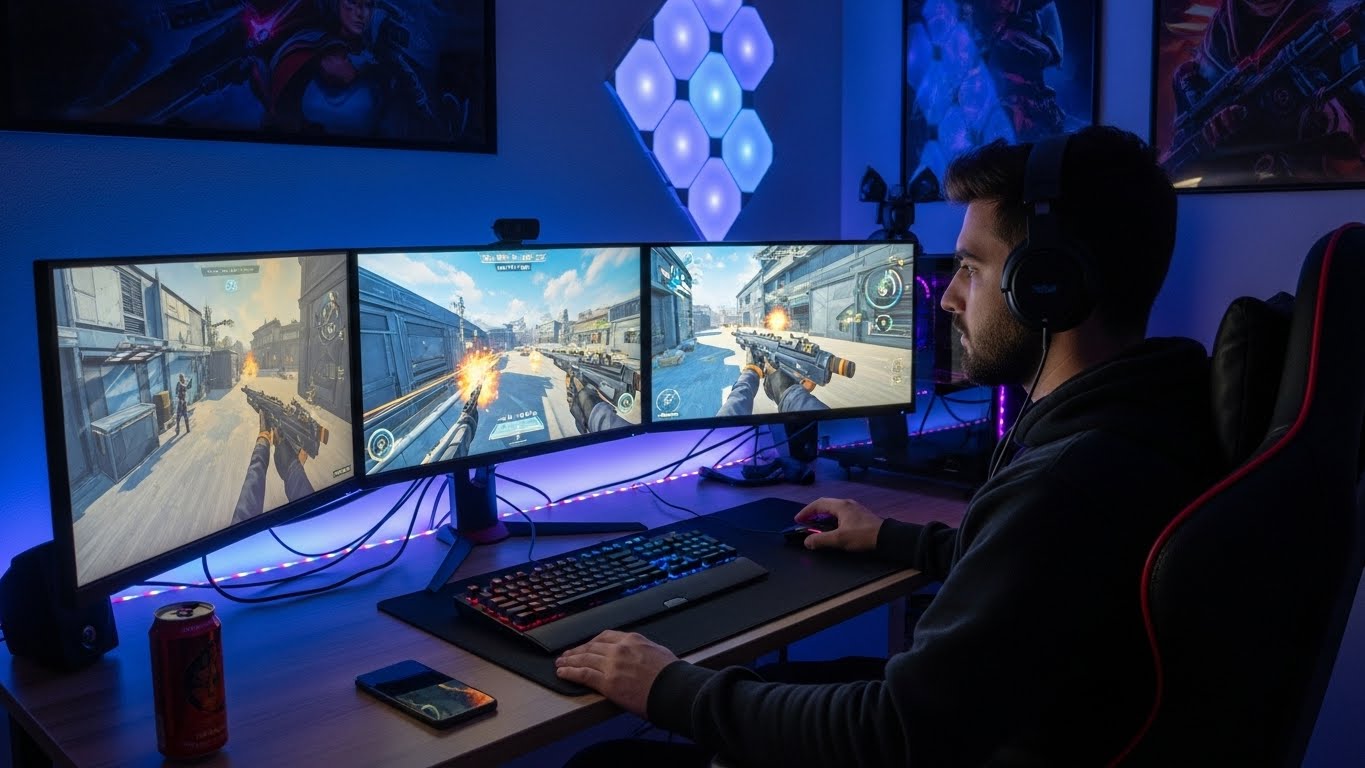
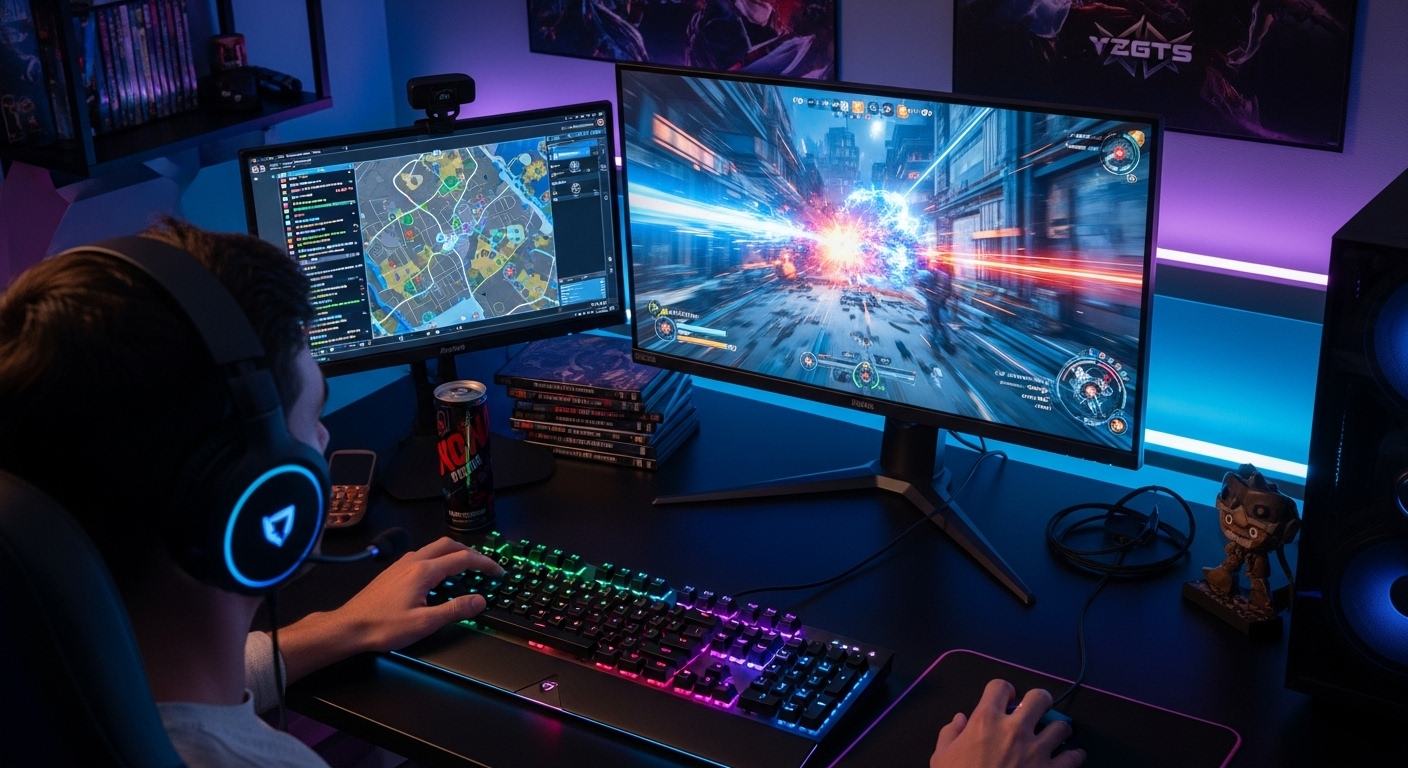
The gaming world has come a long way since the early days of simple pixelated screens and basic gameplay mechanics. Today, it has blossomed into a multi-billion-dollar industry, influencing culture, social dynamics, and even technology. From home consoles to virtual reality experiences, gaming has evolved in ways that were once unimaginable. This journey is not just about better graphics or more complex mechanics—it’s about the immersion, the stories, and the communities that have formed around these digital experiences. But how did gaming evolve from a pastime to a cultural phenomenon? Let’s explore this transformation.
The Humble Beginnings: The Rise of Arcades and Consoles
The early days of gaming were modest but revolutionary. In the 1970s, arcade machines like Pong and Space Invaders introduced people to a new form of entertainment. These games were simple, yet captivating—players were hooked by the challenge and the novelty of interacting with a machine. It wasn’t just about winning; it was about the experience.
The advent of home consoles like the Atari 2600 and Nintendo Entertainment System (NES) in the early 1980s brought gaming into living rooms, making it a more accessible activity for families and individuals alike. Titles like Super Mario Bros. and Pac-Man became household names, and suddenly, the idea of playing video games on a screen at home wasn’t just a trend—it was the future.
Though these games were simple, they laid the foundation for the gaming industry. Players weren’t just interacting with static screens—they were embarking on small, virtual adventures. At the time, no one knew just how far gaming would go, but it was clear that the medium had vast potential.
The 3D Leap: Bringing Games to Life
The next monumental step in gaming’s evolution came in the 1990s, with the shift from 2D to 3D graphics. Sony’s PlayStation and Nintendo 64 introduced not only new hardware but also a new way of thinking about game design. Suddenly, games weren’t just side-scrolling or top-down—they were expansive, immersive worlds that players could explore.
Super Mario 64 and The Legend of Zelda: Ocarina of Time are prime examples of how 3D technology reshaped gaming. These titles offered players a vast, open world to navigate, filled with puzzles, enemies, and hidden secrets. The sense of freedom and discovery was unmatched at the time, setting the stage for the type of expansive gameplay we see today.
The shift to 3D didn’t just change visuals—it changed the way players interacted with the game world. Complex camera systems, the ability to move in all directions, and fully realized 3D environments created a new level of immersion. It was no longer just about getting from point A to point B—it was about living within the game, experiencing a digital world as real as anything outside the screen.
The Multiplayer Revolution: From Solo Play to Global Communities
As gaming technology advanced, so did the way players interacted with each other. While early games were largely solitary or limited to couch co-op, the 2000s saw the rise of online multiplayer gaming. The introduction of Xbox Live and PlayStation Network gave players the ability to connect with others around the globe, marking a dramatic shift in how games were played and experienced.
Titles like Halo 2, World of Warcraft, and Call of Duty became synonymous with online multiplayer experiences. These games offered competitive or cooperative modes where players could team up or battle against others from all over the world. The rise of the internet turned gaming from a primarily local activity to a global phenomenon, fostering a new sense of community.
Esports, which began as a niche interest, exploded in popularity in the 2010s, with millions of fans tuning in to watch professional players compete in games like League of Legends, Dota 2, and Counter-Strike. Gaming had transformed from a solitary hobby into a social event, one that brought people together across borders and cultures.
But beyond competition, online multiplayer allowed for new types of games that focused on cooperation and shared experiences. Titles like Fortnite and Minecraft brought players together to build, explore, and create in virtual spaces, further cementing the idea of gaming as a form of social interaction.
Open-World Gaming: Giving Players Freedom
One of the biggest trends in gaming in recent years has been the rise of open-world games. Games like The Elder Scrolls V: Skyrim, Red Dead Redemption 2, and The Witcher 3: Wild Hunt have redefined what it means to play a video game. Rather than funneling players down a linear path, these games give them massive, open environments to explore, full of stories, quests, and activities to engage with at their own pace.
Open-world gaming is about freedom. Players can choose how they want to play the game—whether it’s by following the main story, diving into side quests, or simply exploring the world. These games have created worlds that feel alive, with dynamic weather systems, day-night cycles, and NPCs that react to player actions. This level of interactivity and immersion has made open-world games some of the most beloved titles in the industry.
However, these expansive games also come with challenges. The sheer size and complexity of these worlds require immense amounts of detail and resources. Creating a truly living, breathing world takes time, and while modern gaming hardware is capable of rendering these environments, it’s still a feat that few developers can pull off with consistency.
The Next Frontier: Virtual Reality and Beyond
As technology continues to evolve, the next frontier for gaming lies in virtual reality (VR) and augmented reality (AR). VR gaming allows players to immerse themselves completely in a virtual world, interacting with the environment in real time using headsets and motion controllers. Games like Beat Saber, Half-Life: Alyx, and Superhot VR showcase the unique experiences VR can offer, from physical interaction to truly immersive storytelling.
However, VR is still in its early stages. While it offers a glimpse into the future of gaming, it is not yet widely adopted. The hardware is expensive, and many players may not have the space or resources to enjoy the full experience. Yet, as the technology improves and becomes more affordable, VR has the potential to transform gaming once again, offering experiences that are even more immersive and interactive than before.
Augmented reality, on the other hand, blends the real world with digital elements, creating new opportunities for gaming that interact with your surroundings. Pokémon Go is the most well-known example, where players can catch virtual creatures that appear in real-world locations. While AR is still in its infancy, its ability to combine gaming with physical space could lead to new forms of play, community interaction, and storytelling.
The Future of Gaming: Innovation and Inclusivity
Looking to the future, the next steps in gaming technology are bound to be just as revolutionary as what has come before. As hardware continues to improve, we can expect even more lifelike graphics, faster load times, and more immersive gameplay. However, the future of gaming will also be about inclusivity—ensuring that gaming remains accessible to a broader audience.
Cloud gaming services like Google Stadia and Xbox Cloud Gaming are already making high-quality games available to people who don’t own expensive consoles or gaming PCs. This opens the door for millions more to experience gaming without the barrier of costly hardware. Furthermore, advancements in accessibility, like customizable control schemes and adaptive controllers, ensure that gaming becomes a hobby anyone can enjoy, regardless of physical ability.
The stories we tell through games are evolving as well. From rich narratives to multiplayer experiences, games are becoming more diverse in their offerings. More voices are being heard, and developers are crafting experiences that resonate with a wider variety of players. This focus on inclusivity and representation is key to ensuring that gaming continues to grow and appeal to people of all backgrounds and interests.
Conclusion: A Never-Ending Journey
The journey of gaming is far from over. From the pixelated simplicity of early arcade games to the hyper-realistic, interactive experiences we enjoy today, the gaming industry has constantly reinvented itself. But as we look forward, it’s clear that innovation is still at the heart of gaming’s evolution. New technologies like VR, AR, and cloud gaming will continue to push the boundaries of what’s possible, and as the medium matures, so too will the stories we experience, the communities we build, and the way we connect with one another.
Gaming is no longer just a pastime—it’s a cultural force that brings people together, sparks creativity, and shapes the future of entertainment. And in that future, one thing is certain: the adventure is far from over.