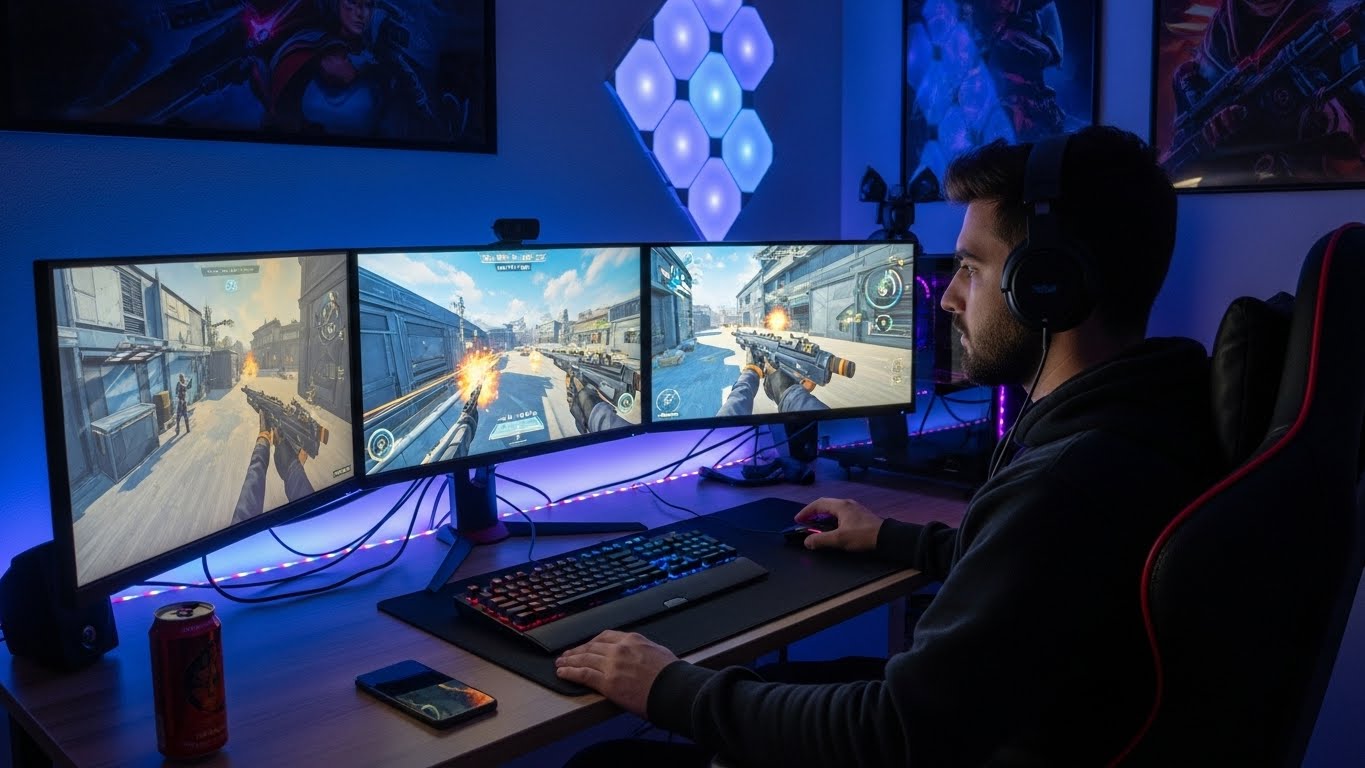
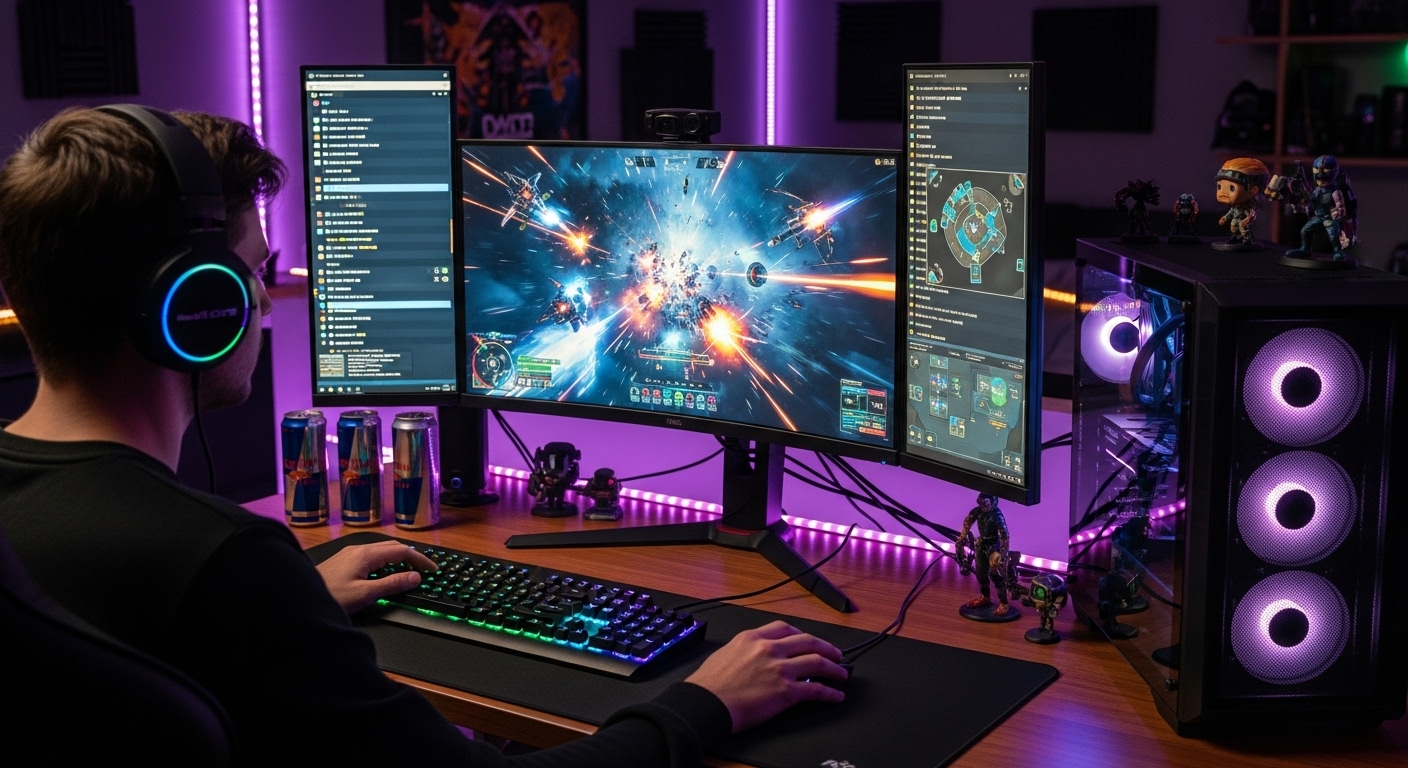
Gaming has come a long way from its humble beginnings. From pixelated sprites on old-school arcade machines to the lifelike graphics of today’s open-world titles, video games have continuously evolved in both complexity and popularity. What started as a niche hobby has grown into a global industry, impacting entertainment, culture, and technology. The gaming world is now brimming with innovation, and as we step into the future, the possibilities for gaming are more exciting than ever. In this post, we’ll take a look at how gaming is transforming, and explore some of the trends and technologies that are shaping the next generation of play.
The Shift to Immersive Gameplay
One of the most noticeable shifts in the gaming industry over the past decade has been the push towards immersion. Gone are the days of static, two-dimensional platforms. Today’s games are more dynamic, more interactive, and offer players a chance to step into fully realized worlds. With the advent of powerful game engines like Unreal Engine 5, developers are able to create breathtakingly realistic environments, bringing even the most fantastical worlds to life with stunning detail.
Games like Red Dead Redemption 2 and The Last of Us Part II have set the standard for storytelling and immersive environments, offering players not only a game to play but an experience to live. Every choice you make in these worlds has consequences, and the narrative adapts to your actions, giving each playthrough a unique feel. As virtual worlds become more realistic and interactive, gaming is no longer just about playing a game – it’s about living within the game itself.
Virtual Reality: Gaming Without Boundaries
Virtual Reality (VR) is one of the most exciting technological innovations in gaming, pushing the boundaries of immersion to new heights. By wearing a VR headset, players are transported into fully immersive 3D worlds where they can physically interact with their environment. Titles like Half-Life: Alyx and Beat Saber have shown just how powerful VR gaming can be, offering experiences that traditional gaming simply cannot match.
VR allows players to move, reach, and manipulate objects within a game, creating an unparalleled sense of presence. Whether you’re fighting zombies in a post-apocalyptic world or solving puzzles in a futuristic city, VR offers a level of interaction that feels more real than ever before. As VR technology continues to improve, with lighter headsets, better graphics, and more intuitive controllers, it’s likely that this type of gaming will become a dominant force in the industry.
Augmented Reality: The Fusion of Real and Virtual Worlds
While VR immerses players in fully digital environments, Augmented Reality (AR) blends the real world with virtual elements. AR has already made waves in mobile gaming, with games like Pokémon Go bringing the concept of augmented play to millions of people around the globe. With AR, players interact with real-world surroundings, while digital objects or characters are overlaid onto their environment, often through the camera of a smartphone or AR glasses.
The potential of AR in gaming goes far beyond capturing virtual creatures in real-life locations. Imagine playing a strategy game where the battlefield is your living room, or solving puzzles where the clues are hidden in your home. AR can revolutionize not just gaming but how we interact with the world, offering interactive and immersive experiences that blend entertainment and the physical space around us.
Cloud Gaming: Playing Anywhere, Anytime
Cloud gaming is one of the most significant advancements in the gaming industry in recent years. With cloud gaming, players can stream their favorite titles directly from remote servers to any device – whether it’s a smartphone, laptop, or smart TV. Services like Xbox Cloud Gaming and Google Stadia are paving the way for a future where gamers no longer need powerful consoles or gaming PCs to enjoy AAA titles.
This shift is transforming the accessibility of gaming. Players no longer need to spend hundreds or even thousands of dollars on expensive hardware. Instead, they can simply subscribe to a cloud gaming service and play high-quality games on devices they already own. Additionally, cloud gaming enables seamless cross-platform play, allowing friends to game together no matter what device they’re using.
The convenience and accessibility offered by cloud gaming mean that it has the potential to make gaming a truly universal experience, allowing players from all walks of life to dive into the worlds they love.
The Role of AI in Shaping Gaming Experiences
Artificial Intelligence (AI) has always played a part in video games, from enemy behavior to procedural content generation. However, as AI technology advances, its role in gaming is becoming more sophisticated and impactful. One area where AI is making a significant difference is in creating more responsive and intelligent non-playable characters (NPCs). In past games, NPCs often followed predictable patterns and could be easily outsmarted. Today, however, AI-driven NPCs can learn from player actions, adapt to strategies, and even offer dynamic conversations, making for more lifelike and challenging interactions.
AI is also being used to improve game design. Procedural generation, powered by AI, allows developers to create vast, dynamic worlds that feel truly unique with every playthrough. Games like No Man’s Sky and Minecraft rely on procedural generation to create infinite worlds filled with surprises and discoveries.
As AI becomes more advanced, it will continue to shape how we interact with games, creating environments that are more alive, responsive, and interactive.
E-Sports: The Rise of Competitive Gaming
What once started as a niche hobby has now become a massive global phenomenon. E-sports, or competitive gaming, has seen explosive growth over the last decade, with games like League of Legends, Fortnite, and Dota 2 attracting millions of viewers and offering multi-million-dollar prizes for top players. Major tournaments are broadcast on platforms like Twitch and YouTube, with esports teams and players gaining celebrity status in the gaming community.
E-sports is not only shaping the future of gaming but also redefining the concept of professional sports. The rise of dedicated gaming leagues, sponsorships, and streaming opportunities means that gamers now have the chance to make a career out of playing games competitively. In fact, competitive gaming is attracting sponsorships from major brands, and many colleges and universities are now offering e-sports scholarships.
With the growing popularity of e-sports, it’s clear that competitive gaming will continue to be a major influence on the industry, driving innovation and community engagement.
Gaming Communities: The Social Aspect of Play
Gone are the days when gaming was a solitary activity. The modern gaming landscape is deeply social, with online multiplayer games allowing players to connect, collaborate, and compete with others from across the globe. Whether it’s teaming up in Fortnite, battling in Call of Duty, or exploring new worlds in World of Warcraft, online multiplayer experiences have become a staple of the gaming world.
Additionally, platforms like Twitch, YouTube, and Discord have created communities around gaming, where players can share experiences, watch others play, and interact with their favorite streamers. The social aspect of gaming has fostered a sense of belonging and has created a global network of players who share a common passion.
As the gaming community grows, it’s clear that gaming is no longer just about playing a game – it’s about being part of a larger, interconnected world. This shift has allowed gaming to reach new audiences and has solidified its place as one of the most popular forms of entertainment in the world.
The Future of Gaming: Infinite Possibilities
As technology continues to evolve, so too will the world of gaming. The next-generation consoles, powered by faster processors and improved graphics, will continue to push the envelope in terms of visual fidelity and performance. Meanwhile, cloud gaming will make games more accessible, allowing players to enjoy top-tier titles on almost any device. Virtual and augmented reality will offer players new ways to experience and interact with games, while AI and procedural generation will create even more dynamic and responsive game worlds.
The future of gaming is boundless, and with emerging technologies like AI, VR, cloud gaming, and e-sports, the industry is poised to enter a new era of creativity, accessibility, and innovation. Whether you’re a casual gamer or a competitive pro, the next generation of gaming promises an experience unlike anything we’ve seen before – and the best part is, we’re only just getting started.