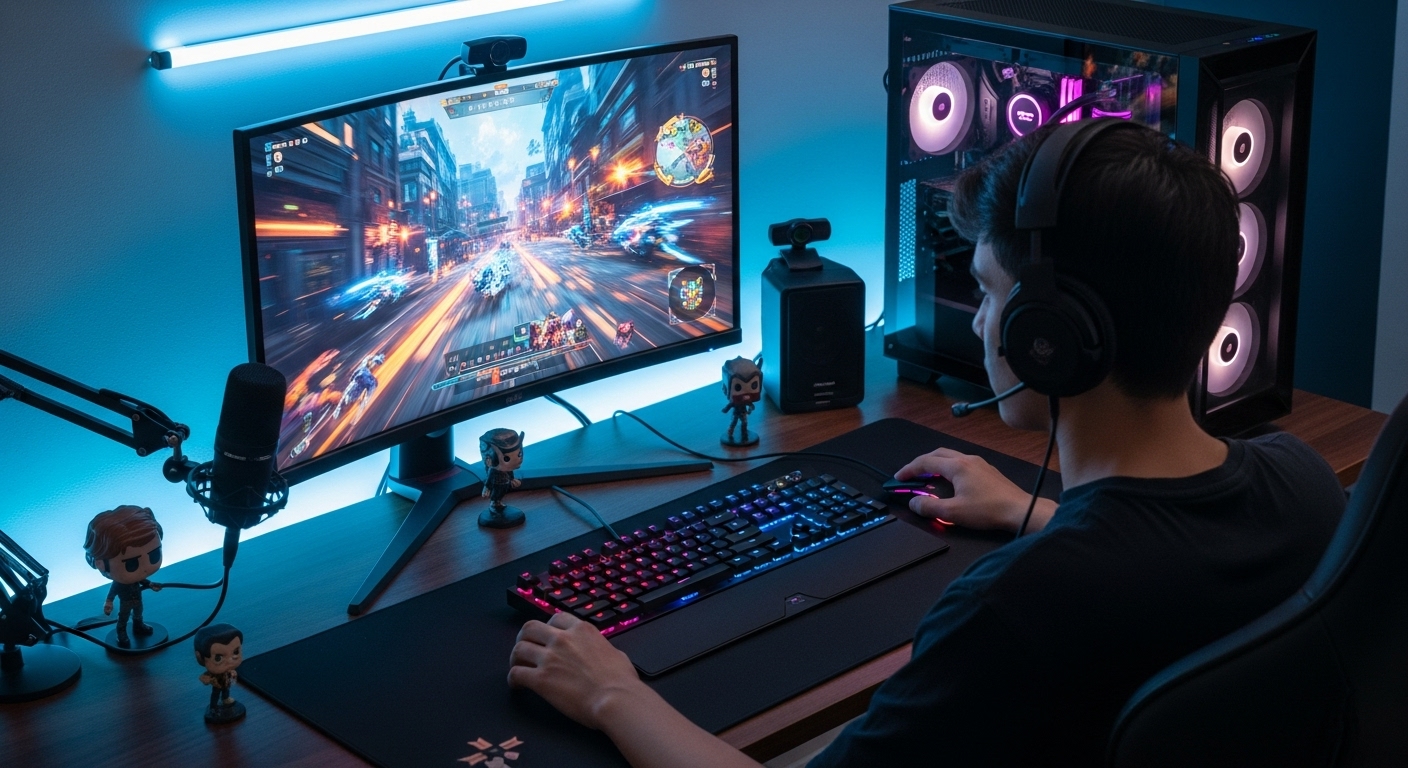
Gaming has come a long way since its humble beginnings in arcades and early home consoles. From pixelated graphics to fully immersive 3D worlds, gaming has continually evolved, shaping an entire culture and influencing the entertainment industry on a global scale. In this blog post, we will explore the history, present, and future of gaming. We’ll take a look at how video games have evolved, the various genres that have emerged, and how gaming is increasingly being recognized as an art form.
The Early Days of Video Games: The Birth of a New Medium
The story of video games begins in the early 1950s when computer scientists and engineers started experimenting with interactive entertainment. One of the first video games, “Tennis for Two,” was created in 1958 by physicist William Higinbotham. This simple game featured two players controlling paddles on an oscilloscope screen, bouncing a dot back and forth, resembling a game of tennis. Although it was groundbreaking for its time, “Tennis for Two” was not widely known or commercially successful.
The true dawn of the video game era arrived in the early 1970s with the release of “Pong.” Created by Atari founder Nolan Bushnell, “Pong” was the first commercially successful arcade game and sparked the video game revolution. The game featured a simple two-player tennis match with rectangular paddles and a bouncing ball. Its success led to the rapid proliferation of arcade games and set the stage for the home console revolution that would follow.
The Rise of Home Consoles: Entering the Living Room
The 1970s and 1980s saw the rise of home video game consoles, marking the beginning of gaming as an activity that could be enjoyed in the comfort of one’s own living room. The first home console, the Magnavox Odyssey, was released in 1972. Although its graphics were rudimentary and it lacked the capabilities of modern consoles, it laid the foundation for future home entertainment systems.
In the following years, companies like Atari, Nintendo, and Sega introduced iconic consoles like the Atari 2600, the Nintendo Entertainment System (NES), and the Sega Genesis. These consoles revolutionized gaming by offering a variety of games that could be played at home, as opposed to having to visit an arcade. Titles such as “Super Mario Bros.” and “Sonic the Hedgehog” became household names and introduced millions of players to the world of interactive entertainment.
The 1980s and 1990s were characterized by rapid technological advancements, with consoles improving their graphics, sound, and processing power. The introduction of CD-based consoles like the Sony PlayStation in 1994 marked a significant leap forward, enabling more complex and immersive gaming experiences.
The Golden Age of Video Games: 3D Graphics and the Rise of the Internet
The 1990s and early 2000s saw some of the most significant changes in the gaming industry, as new technology allowed for the development of 3D graphics, open-world environments, and online multiplayer experiences. The Nintendo 64 and Sony PlayStation brought 3D graphics to the forefront, allowing players to explore fully realized 3D worlds in games like “Super Mario 64,” “The Legend of Zelda: Ocarina of Time,” and “Final Fantasy VII.”
The internet played a pivotal role in the evolution of gaming, as online multiplayer games began to emerge. “GoldenEye 007” for the Nintendo 64 popularized online multiplayer on consoles, while games like “Quake” and “Unreal Tournament” introduced the concept of online first-person shooters for the PC. By the early 2000s, broadband internet connections became more widespread, enabling gamers to connect with each other in real-time across vast distances.
This period also saw the rise of the MMORPG (Massively Multiplayer Online Role-Playing Game) genre, with titles like “World of Warcraft” and “EverQuest” providing players with expansive virtual worlds to explore and interact with other players in real-time. These games revolutionized the way people thought about online gaming, creating entire communities of players who spent countless hours immersed in their virtual worlds.
The Current State of Gaming: A Multi-Billion Dollar Industry
Today, video games are more popular than ever before, with the global gaming industry generating billions of dollars in revenue every year. Gaming has evolved into a diverse and multifaceted form of entertainment, appealing to people of all ages and backgrounds. With the advent of mobile gaming, players no longer need expensive consoles or gaming PCs to enjoy their favorite titles. Smartphones and tablets have opened up new avenues for casual gaming, with titles like “Candy Crush,” “Clash of Clans,” and “Pokemon GO” reaching millions of players worldwide.
Consoles like the PlayStation 5, Xbox Series X, and Nintendo Switch offer cutting-edge graphics, fast load times, and a wide range of exclusive titles that continue to push the boundaries of what games can achieve. At the same time, PC gaming remains a popular choice for those seeking high-performance hardware and a more customizable gaming experience. Titles like “Cyberpunk 2077,” “Red Dead Redemption 2,” and “The Witcher 3” showcase the incredible detail and expansive worlds that modern gaming can offer.
Esports has also become a significant part of the gaming landscape. Professional gaming leagues and tournaments now attract millions of viewers, with games like “League of Legends,” “Dota 2,” and “Fortnite” boasting large, dedicated fanbases. The rise of streaming platforms like Twitch and YouTube has also contributed to the growth of the esports industry, with top players and influencers becoming household names in their own right.
The Role of Indie Games: A New Era of Creativity
While big-budget, AAA games dominate the industry, indie games have carved out a unique niche for themselves in the gaming world. Indie developers are often smaller teams or solo creators who rely on their creativity and passion rather than large budgets to bring their ideas to life. Games like “Undertale,” “Hollow Knight,” and “Stardew Valley” have gained widespread recognition for their innovative gameplay, captivating narratives, and distinctive art styles.
The rise of digital distribution platforms like Steam, the Epic Games Store, and itch.io has made it easier than ever for indie developers to share their games with a global audience. These platforms provide an avenue for smaller studios to reach players without the need for traditional publishers or marketing budgets, leading to a more diverse range of games and experiences.
Indie games often push the boundaries of what is considered “mainstream” by experimenting with unconventional gameplay mechanics, narrative structures, and visual styles. This has led to a resurgence in the appreciation for art games and experimental designs, as players seek new and unique experiences beyond the standard AAA fare.
The Future of Gaming: Virtual Reality, AI, and Beyond
As technology continues to advance, the future of gaming looks more exciting than ever. Virtual reality (VR) and augmented reality (AR) have the potential to revolutionize the way we experience games, offering players an entirely new level of immersion. VR headsets like the Oculus Rift and PlayStation VR have already begun to make waves in the gaming industry, allowing players to step into fully realized virtual worlds and interact with their surroundings in ways that were once impossible.
AI is another area that is poised to transform the gaming experience. From procedurally generated worlds to more advanced NPC behaviors, artificial intelligence has the potential to create even more dynamic and engaging gameplay experiences. AI-driven narratives and personalized storylines could also lead to games that adapt and evolve based on individual player choices, creating highly unique and personal gaming experiences.
Cloud gaming is also expected to become more prevalent in the coming years. Services like Google Stadia and Xbox Cloud Gaming allow players to stream games directly to their devices without the need for high-end hardware. As internet speeds improve and infrastructure expands, cloud gaming could make high-quality gaming accessible to a wider audience, regardless of their location or financial means.
Gaming as a Cultural Force: The Impact on Society
Video games have long been more than just a form of entertainment. They have become an integral part of popular culture, influencing everything from movies and television to music and fashion. Franchises like “Super Mario,” “The Legend of Zelda,” and “Pokémon” have transcended the world of gaming to become cultural icons, with merchandise, TV shows, and movies helping to solidify their place in the mainstream.
Gaming has also had a significant impact on social interaction. Online multiplayer games and platforms like Discord and Steam have created virtual communities where players can connect, share experiences, and form lasting friendships. Esports has further strengthened this sense of community, as players and fans come together to celebrate their shared love of gaming.
At the same time, gaming has sparked debates about its potential effects on mental health, addiction, and the portrayal of violence. While many studies have shown that gaming can be a positive and enriching experience, it is important for players to engage in gaming responsibly and maintain a healthy balance with other aspects of their lives.
Conclusion: The Ongoing Evolution of Gaming
From its humble beginnings in arcades to its current status as a multi-billion dollar industry, gaming has evolved into one of the most influential forms of entertainment in the world. As technology continues to advance, the possibilities for what gaming can achieve are virtually limitless. Virtual reality, artificial intelligence, and cloud gaming are just a few of the exciting developments on the horizon, and it’s clear that gaming will continue to play an important role in shaping our entertainment experiences for years to come.
Whether you’re a lifelong gamer or someone who’s just starting to explore the world of interactive entertainment, there’s no denying that gaming has become an integral part of modern culture. With its rich history, diverse genres, and ever-expanding universe of experiences, the future of gaming is an exciting one, full of innovation and creativity.