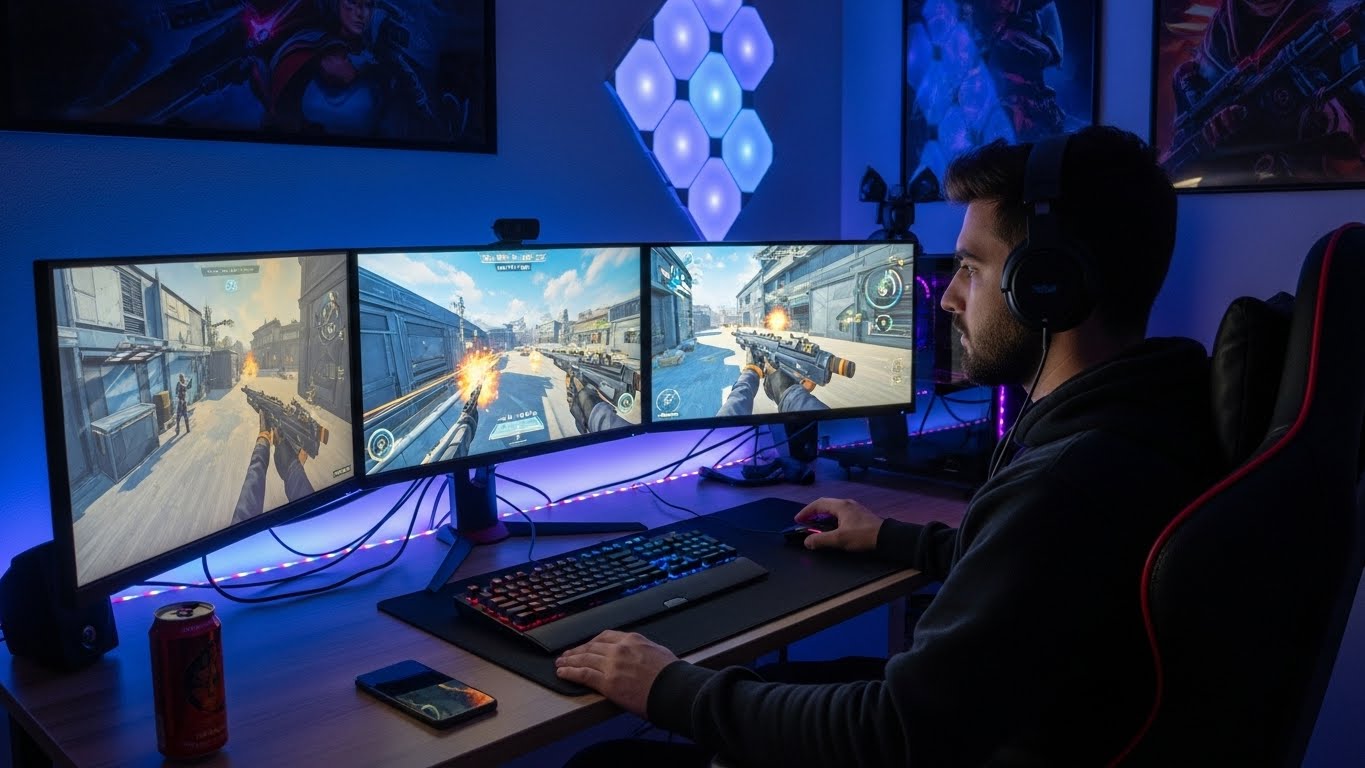

Gaming has transformed from a niche hobby enjoyed by a few passionate enthusiasts into a global phenomenon that influences culture, technology, art, and human interaction. What began as small, simple pixelated experiments in the 1970s has now become a multi-trillion-dollar industry spanning immersive virtual worlds, competitive esports, mobile innovations, and cinematic storytelling. The story of gaming is not merely about machines or screens; it is about people, creativity, and the endless desire to experience new worlds beyond our own.
The Birth of Digital Play
The origins of gaming trace back to the early experiments in computing. In the mid-20th century, scientists and engineers were tinkering with primitive computers when they stumbled upon the idea of using these machines for recreation. The earliest known game, “Tennis for Two,” was created in 1958 on an oscilloscope, followed by the groundbreaking “Spacewar!” in 1962. These humble beginnings laid the foundation for an art form that would soon sweep across the globe.
By the time arcade machines hit the public in the 1970s, the gaming revolution had truly begun. Games like “Pong,” “Space Invaders,” and “Pac-Man” became cultural icons. They introduced the concept of interactive entertainment to millions, showing that computers could be fun, social, and even addictive. The blinking lights and electronic sounds of arcades became the soundtrack of a generation.
The Rise of Home Consoles
As technology advanced, the dream of bringing gaming into homes became a reality. The late 1970s and early 1980s saw the emergence of consoles like the Atari 2600, which transformed living rooms into virtual playgrounds. For the first time, families could gather around a television to compete and cooperate in digital worlds. The cartridge system allowed players to swap out games, giving rise to an expansive ecosystem of creativity.
However, the gaming industry faced a near-catastrophic crash in 1983. Oversaturation, poor-quality games, and consumer fatigue nearly ended the market. Yet, out of the ashes rose a savior — Nintendo. With the release of the Nintendo Entertainment System (NES) in 1985, gaming was reborn. Mario, Link, Samus, and other iconic characters became household names. The NES restored faith in the medium and redefined what gaming could be: structured, story-driven, and full of charm.
The 16-Bit Renaissance
The 1990s marked a golden age of innovation. The rivalry between Nintendo and Sega fueled a creative explosion. The 16-bit consoles, such as the Super Nintendo Entertainment System (SNES) and the Sega Genesis, delivered colorful worlds, memorable soundtracks, and improved gameplay mechanics. This era gave birth to classics like “The Legend of Zelda: A Link to the Past,” “Sonic the Hedgehog,” and “Street Fighter II.”
Gamers debated endlessly over which console was superior, but the true winner was the art of gaming itself. Developers were learning how to tell stories, create emotion, and push the boundaries of imagination. The idea of “video game as art” was slowly taking root, even if mainstream recognition was still decades away.
The Dawn of 3D Worlds
The mid-to-late 1990s brought a seismic shift with the advent of 3D graphics. The jump from two-dimensional sprites to fully realized 3D environments changed the way games were designed, played, and experienced. Sony entered the scene with the PlayStation, a sleek and powerful console that appealed to both casual players and hardcore fans.
Games like “Final Fantasy VII,” “Metal Gear Solid,” and “Resident Evil” redefined storytelling and atmosphere. For the first time, games could rival movies in terms of emotional impact and production quality. Nintendo responded with the Nintendo 64, offering masterpieces like “Super Mario 64” and “The Legend of Zelda: Ocarina of Time,” both of which are still hailed as benchmarks in design.
The New Millennium: Gaming Goes Global
By the 2000s, gaming had cemented itself as a dominant force in entertainment. The PlayStation 2, Xbox, and GameCube defined an era where innovation met mass appeal. Online connectivity changed everything — players could now compete and cooperate across continents. Titles like “Halo 2,” “World of Warcraft,” and “Counter-Strike” created global communities that transcended borders and languages.
The PC gaming scene also flourished. Modding communities thrived, digital distribution platforms emerged, and independent developers began to challenge big publishers. The rise of broadband internet and social media allowed gamers to connect, share, and build identities around their favorite games.
The Rise of Realism and Cinematic Experiences
As graphics technology advanced, developers began pursuing photorealism and cinematic storytelling. The late 2000s and early 2010s produced visually stunning experiences such as “Uncharted,” “The Last of Us,” and “Red Dead Redemption.” Games became vehicles for emotion, moral dilemmas, and deep narrative experiences.
Players were no longer simply pressing buttons; they were participating in stories. The line between movie and game blurred. Voice acting, orchestral music, and motion capture brought characters to life with unprecedented realism. Studios began hiring Hollywood talent, bridging the gap between gaming and traditional cinema.
The Emergence of Indie Creativity
While major studios dominated headlines, a quiet revolution was taking place in the indie scene. Small teams and even solo developers were crafting innovative, heartfelt experiences that pushed artistic boundaries. Games like “Braid,” “Undertale,” “Hollow Knight,” and “Celeste” proved that budget does not determine brilliance.
Digital distribution allowed these titles to reach millions of players without the need for massive publishers. Indie games championed experimentation and emotional storytelling, offering fresh perspectives often missing from mainstream blockbusters. They reminded the world that gaming is, at its core, an expression of creativity and individuality.
The Explosion of Esports
Competitive gaming, once a niche pursuit, exploded into a global spectacle. Esports became a legitimate profession, with tournaments filling stadiums and streaming platforms broadcasting matches to millions. Games like “League of Legends,” “Dota 2,” “Counter-Strike: Global Offensive,” and “Fortnite” turned players into celebrities.
The discipline, teamwork, and strategy involved rival those of traditional sports. Sponsorships, scholarships, and professional teams emerged, legitimizing gaming as both an entertainment industry and an athletic pursuit. Esports culture also fostered inclusivity and accessibility, allowing anyone with skill and dedication to compete on the world stage.
The Social Revolution of Gaming
Gaming has become one of the most powerful social tools in the modern world. Online multiplayer experiences like “Minecraft,” “Roblox,” and “Among Us” turned virtual spaces into social hubs where friendships are formed and memories created. Games are no longer solitary activities — they are shared experiences that unite people across distances and cultures.
Streaming platforms have also reshaped the landscape. Millions tune in daily to watch their favorite streamers play, chat, and entertain. The line between player and audience has blurred, creating a participatory form of media unlike anything before. Gaming is no longer just about playing; it’s about sharing, creating, and belonging.
The Power of Virtual Reality and Immersion
The dream of stepping inside a game world became reality with the rise of virtual reality technology. Headsets like the Oculus Quest and PlayStation VR brought fully immersive experiences to consumers. Players could now physically interact with their environments, blurring the boundary between the virtual and the real.
VR is still evolving, but its potential is enormous. From realistic simulations to meditative art experiences, virtual reality offers new dimensions of empathy and creativity. Developers are experimenting with haptic feedback, full-body tracking, and spatial audio to create ever deeper levels of immersion.
The Mobile Gaming Revolution
If there was ever a technological shift that democratized gaming completely, it was the rise of smartphones. Mobile games turned billions of people into gamers. Titles like “Angry Birds,” “Candy Crush,” and “Clash of Clans” showed that gaming didn’t require a console or PC — just a touchscreen and a few spare minutes.
While some traditionalists dismissed mobile gaming as casual or simplistic, its influence cannot be overstated. Mobile platforms introduced new business models like free-to-play and microtransactions, changing the industry’s economics forever. Today, mobile gaming represents the largest share of global gaming revenue, proving that accessibility and convenience can drive mass adoption.
Storytelling and Emotional Depth
Modern gaming has matured into a storytelling powerhouse. Games are now capable of delivering experiences that rival literature and film in emotional resonance. Titles like “Journey,” “Life is Strange,” and “The Witcher 3” explore complex human themes such as identity, morality, and loss.
Players are not just observers; they are participants in the narrative. Their choices shape outcomes, making each experience personal and unique. This interactivity gives gaming a storytelling advantage unmatched by other media. It is no longer about watching a hero’s journey — it is about living it.
The Role of Art and Music
Gaming’s artistic expression extends beyond visuals and gameplay. Music plays a vital role in defining atmosphere, emotion, and identity. From the haunting melodies of “Shadow of the Colossus” to the nostalgic tunes of “Super Mario Bros.,” music elevates the experience from mechanical interaction to emotional connection.
Art design, too, defines the soul of a game. Every pixel, texture, and color palette contributes to storytelling. The best games communicate through imagery and tone as much as through dialogue or plot. Artists and composers within the gaming industry have achieved global recognition, underscoring the medium’s artistic legitimacy.
The Challenges and Controversies
Despite its growth and innovation, gaming faces challenges. Issues like addiction, toxicity, crunch culture, and representation have sparked debate. The industry continues to grapple with balancing profit motives against player well-being and artistic integrity.
Microtransactions and loot boxes have raised ethical questions about monetization and fairness. Meanwhile, discussions about diversity and inclusion have encouraged developers to broaden perspectives and create more inclusive worlds. These growing pains reflect gaming’s maturity — an art form and industry still evolving, learning, and striving for better.
The Future of Gaming
The future of gaming promises innovation that will once again redefine how humans interact with technology. Artificial intelligence is already transforming game design, enabling smarter NPCs and adaptive storytelling. Cloud gaming is breaking hardware barriers, allowing players to stream high-end experiences on any device.
Augmented reality, too, offers immense possibilities. Games that blend the digital and physical world could turn entire cities into interactive playgrounds. As technology advances, so too does our ability to dream bigger, create deeper, and connect wider.
The lines between gaming, art, education, and social life continue to blur. Virtual classrooms, therapeutic simulations, and narrative experiences for mental health are redefining what gaming can achieve. It is no longer about escapism alone; it is about empowerment, creativity, and transformation.
The Cultural Legacy
Gaming’s cultural impact is undeniable. Its language, memes, and aesthetics have become part of everyday life. Game soundtracks appear in concerts, fashion brands collaborate with game franchises, and film adaptations of beloved titles dominate theaters.
Moreover, gaming has fostered generations of thinkers, coders, artists, and storytellers. It has inspired creativity in countless forms — from fan art and cosplay to YouTube channels and podcasts. Gaming is not just a pastime; it is a culture, a language, and a movement.
A Universal Medium of Expression
What makes gaming truly special is its universality. Anyone, regardless of age, background, or ability, can find a world that resonates with them. Whether you seek competition, creativity, or connection, there is a game for you.
Gaming unites people through shared passion. It teaches problem-solving, patience, empathy, and resilience. It fosters imagination and collaboration. In a world often divided by boundaries, gaming offers a common ground where everyone can play, dream, and belong.
Conclusion: Beyond the Screen
The story of gaming is the story of humanity’s relationship with technology and imagination. From the blinking pixels of the 1970s to the virtual realities of today, gaming has evolved into one of the most dynamic and influential art forms in history.
As we look to the future, gaming continues to remind us that play is not a distraction from life — it is an essential part of it. Through play, we explore who we are, who we can be, and what worlds we can build together. The controller, the keyboard, or the touchscreen are not just tools of entertainment; they are instruments of creativity, empathy, and boundless possibility.
Gaming has always been more than a pastime. It is an expression of human potential — an ever-expanding universe of stories, challenges, and dreams. And in that universe, there will always be another adventure waiting to begin.