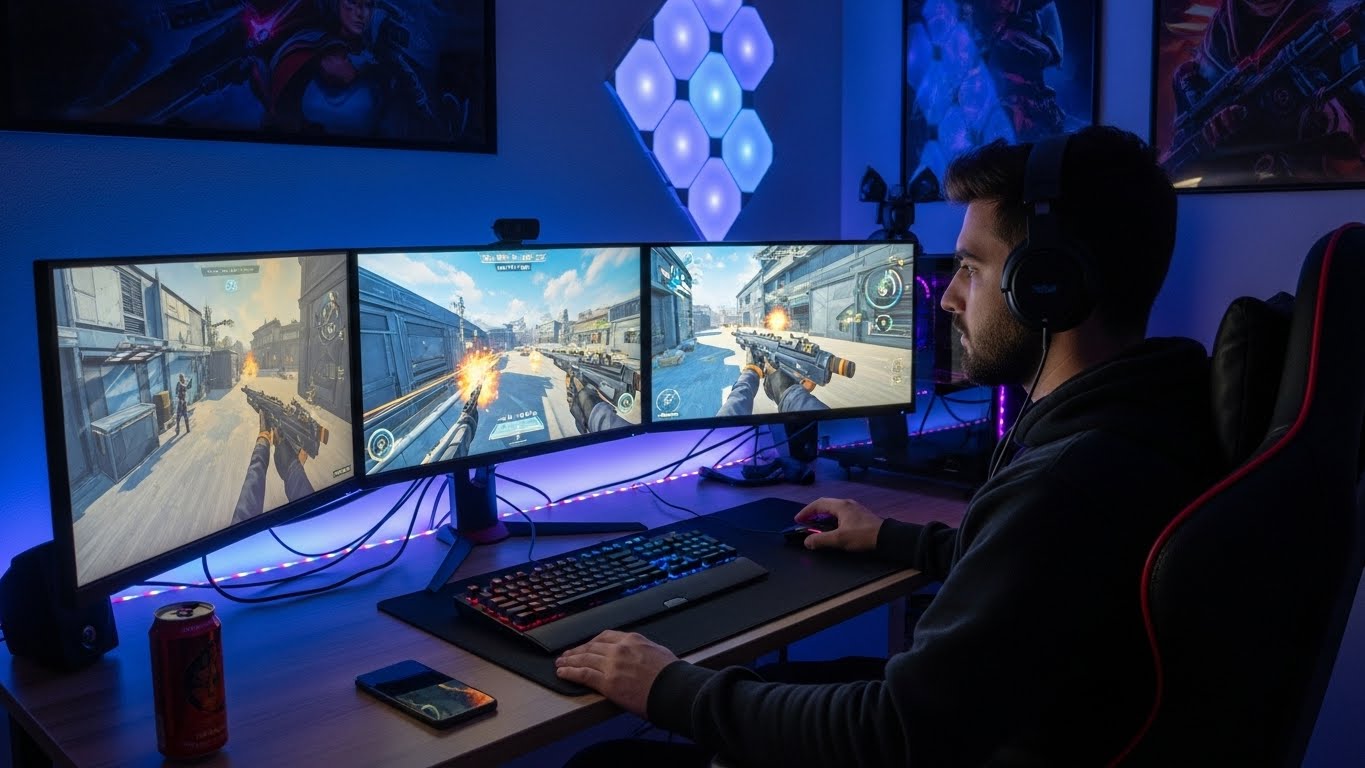
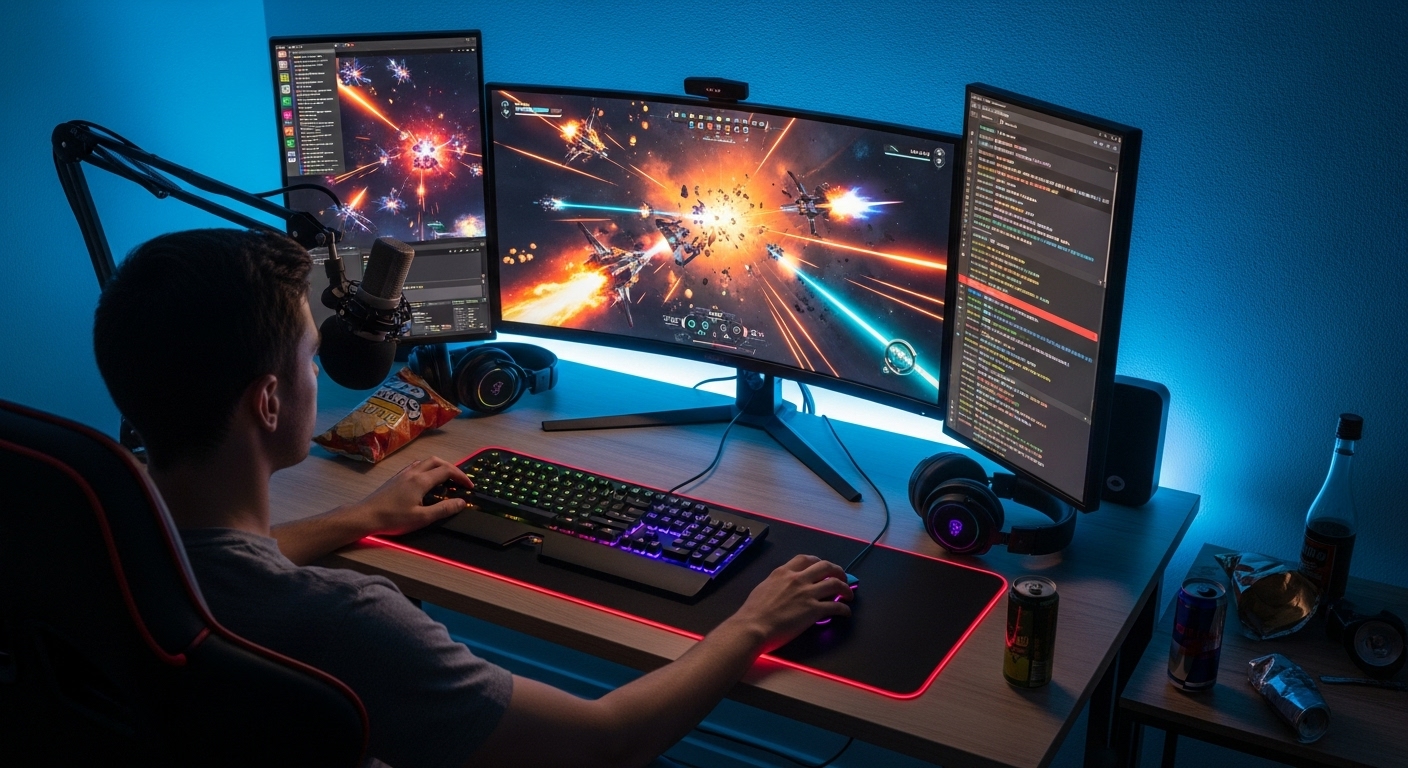
In the span of just a few decades, gaming has transformed from a niche hobby into a global cultural phenomenon. Once confined to arcades and early home consoles, gaming now encompasses a vast array of platforms, experiences, and communities. From casual mobile games to immersive virtual realities, the world of gaming has grown beyond entertainment to become a major part of our social, cultural, and even professional lives. In this blog post, we’ll delve into the evolution of gaming, its impact on society, and what the future holds for this dynamic industry.
The Birth of Gaming: A Simple Beginning
The history of video gaming is relatively young, yet its rise to prominence has been swift and transformative. The earliest examples of video games date back to the 1950s, with primitive experiments on early computers. However, it wasn’t until the 1970s that video gaming began to take shape as a mainstream activity. Games like Pong and Space Invaders emerged from arcade machines, attracting players and generating the first signs of what would become a thriving industry.
These early games were rudimentary by today’s standards, featuring simple pixelated graphics and basic gameplay mechanics. Yet, they captured the imagination of players and set the foundation for the medium’s growth. Arcades became social hubs where people could compete for high scores, and home consoles like the Atari 2600 brought gaming into living rooms, making it accessible to a wider audience. This marked the start of a revolution that would change the entertainment landscape forever.
Consoles, Characters, and Competition
As gaming technology advanced, the 1980s and 1990s saw the explosion of iconic consoles and beloved characters that defined entire generations. The rivalry between Nintendo and Sega epitomized the fierce competition that would shape the gaming industry for years to come. Titles like Super Mario Bros., Sonic the Hedgehog, and The Legend of Zelda not only showcased technological advances but also introduced characters and franchises that became household names.
These games and consoles defined the childhoods of many and sparked an ongoing debate about which system was superior. The emergence of 3D graphics in the mid-1990s with systems like the Sony PlayStation and Nintendo 64 further pushed gaming into a new era. Super Mario 64, for example, offered players an open 3D world to explore, laying the groundwork for the expansive and immersive environments we see in games today.
The Shift to Online Play: A Global Community
The turn of the millennium marked a major shift in how games were played. Broadband internet access began to reach a larger audience, and online gaming became the next big evolution. Games like Halo 2, World of Warcraft, and Counter-Strike allowed players to connect and compete in real-time from opposite sides of the globe. Multiplayer online games became a staple of modern gaming, breaking down geographical barriers and creating virtual communities where friendships, rivalries, and collaborations flourished.
Online gaming introduced a social aspect that had previously been limited to local multiplayer experiences. The ability to communicate with other players through voice chat and form teams or guilds transformed how people interacted with games. For the first time, gaming wasn’t just about individual experience—it was about connecting with others and sharing the experience in real-time. This shift led to the rise of gaming as a spectator sport, giving birth to the world of eSports.
eSports: The Rise of Competitive Gaming
What was once a casual hobby became an incredibly serious pursuit for many. eSports, or electronic sports, has become one of the fastest-growing sectors in the global entertainment industry. Games like League of Legends, Dota 2, and Overwatch have elevated gaming to the level of professional competition, where players train for years to compete for multimillion-dollar prizes.
As eSports grew in popularity, it also gained recognition as a legitimate career path. Professional gamers now sign sponsorship deals, compete in televised events, and even earn fame and fortune. Major tournaments draw crowds of thousands, and millions more watch online. The growth of eSports also led to the rise of streaming platforms like Twitch, where players can broadcast their gameplay to global audiences, further cementing the social and competitive elements of gaming.
The Rise of Mobile Gaming: Games Everywhere
The next major shift in the gaming world came with the proliferation of smartphones. The accessibility of mobile devices brought gaming to an entirely new demographic. Games like Angry Birds, Candy Crush Saga, and Pokémon Go captivated millions of players who had never before considered themselves “gamers.”
Mobile gaming’s appeal lies in its simplicity and convenience. Players could now enjoy games anytime and anywhere, without the need for a console or a PC. Mobile platforms also introduced a range of new genres, including casual games, puzzle games, and location-based games, which provided a new type of experience. Pokémon Go is a prime example of how mobile gaming blends real-world exploration with digital interaction, encouraging players to go outside and engage with their surroundings in a new way.
Virtual Reality: A New Dimension of Immersion
As the technology behind gaming continues to advance, the industry is embracing a new frontier: virtual reality (VR). VR offers players a level of immersion that traditional gaming platforms simply cannot match. By wearing VR headsets, players can step directly into digital worlds, experiencing games as if they were physically inside them.
VR titles like Beat Saber and Half-Life: Alyx have shown the immense potential of VR gaming. The ability to interact with the game world using hand controllers and motion sensors adds a new layer of depth to gameplay. Players can move, gesture, and explore their environment in ways that feel almost lifelike. While VR gaming is still relatively new, it is clear that the technology will continue to evolve, bringing more realistic and immersive experiences to players around the world.
Gaming as a Cultural Force
Gaming is no longer just a pastime—it has become a major cultural force. It influences art, fashion, music, and even language. Icons from video games like Mario, Link, and Master Chief are as well-known as movie stars and musicians. The gaming industry now collaborates with other forms of entertainment, from film adaptations of popular games to music videos inspired by game soundtracks.
Additionally, gaming has become a way to tell stories that resonate with players on a personal level. Games like The Last of Us, Red Dead Redemption 2, and Journey have shown that video games are capable of evoking powerful emotions and delivering complex narratives. Players connect with these stories in ways that are unique to gaming, experiencing them firsthand and making choices that affect the outcome.
What’s Next for Gaming?
The future of gaming is filled with possibilities. Cloud gaming, for example, is poised to make gaming more accessible than ever before. Services like Google Stadia and Xbox Cloud Gaming allow players to stream games without needing powerful hardware, enabling gaming on almost any device. This shift could help make gaming a truly universal activity, removing barriers of entry and democratizing access.
Artificial intelligence (AI) is also expected to play a key role in the future of gaming. As AI technology advances, it will enable more dynamic and responsive game worlds, where NPCs (non-playable characters) can adapt to player behavior in real-time. This could lead to more immersive and personalized gaming experiences, where no two playthroughs are alike.
Another exciting development on the horizon is the further integration of augmented reality (AR). Games like Pokémon Go have shown that AR can enhance real-world experiences by blending digital content with our surroundings. As AR technology improves, we can expect to see even more innovative games that blur the lines between the digital and physical worlds.
Conclusion
Gaming has evolved from simple pixelated screens to complex, immersive experiences that continue to push the boundaries of technology and creativity. From the early days of arcades to the rise of mobile gaming and virtual reality, gaming has become a cornerstone of modern culture. With advancements in AI, cloud gaming, and AR/VR technology, the future of gaming promises to be even more exciting. Whether you’re a casual player or a competitive gamer, the world of gaming has something to offer, and it’s only going to get better.