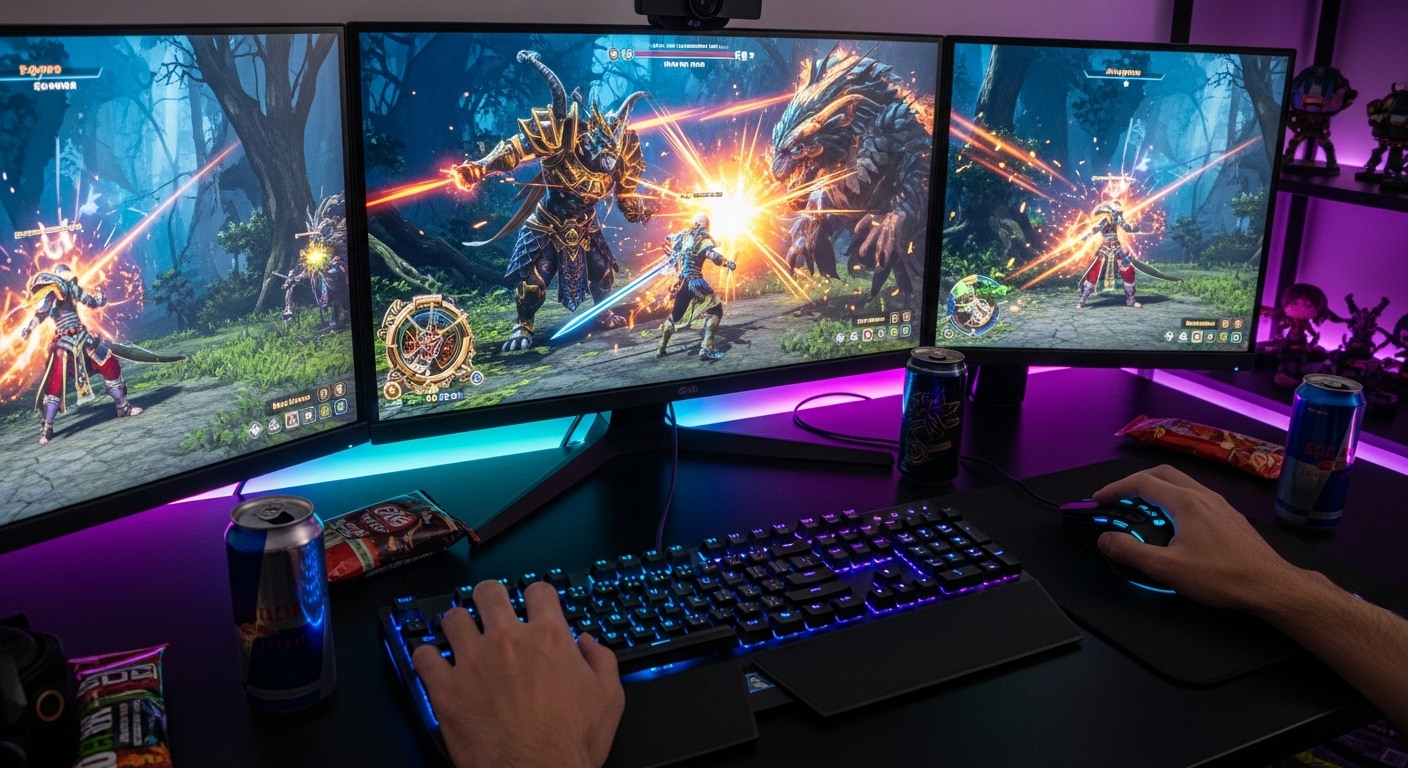
Gaming has come a long way from its humble beginnings. From the classic 8-bit graphics of early arcade machines to the cutting-edge VR experiences we enjoy today, the world of gaming has evolved in ways that were once unimaginable. This journey through time not only highlights the technological advances but also the cultural impact gaming has had on society. Let’s take a closer look at how gaming has transformed over the years.
The Birth of Gaming: The 70s and 80s
In the late 1970s and early 1980s, the gaming world was born with the release of iconic arcade games like Pong and Space Invaders. These early games were simple in both design and gameplay, with pixelated graphics that are considered nostalgic by today’s standards. However, they laid the foundation for what would become a global phenomenon.
In this era, gaming was a public activity. Arcades were the places where players gathered to compete for high scores, and home consoles were still in their infancy. The idea of gaming as a form of entertainment was still being shaped, but it had already begun to carve a niche for itself in popular culture.
The Console Revolution: The 90s
The 1990s ushered in the golden age of home gaming. The release of iconic consoles such as the Super Nintendo Entertainment System (SNES), Sega Genesis, and the Sony PlayStation marked a new chapter in gaming. Graphics and sound became more sophisticated, and developers began creating more intricate and engaging storylines.
The advent of 3D graphics changed the gaming landscape forever, with titles like Super Mario 64 and Final Fantasy VII showcasing the possibilities of the new hardware. The appeal of gaming expanded beyond a niche group of enthusiasts to include players from all walks of life. The 90s also saw the rise of multiplayer gaming, with games like GoldenEye 007 and Mario Kart allowing friends to enjoy a competitive experience together.
The Age of Online Gaming: The 2000s
As the internet began to permeate everyday life in the early 2000s, online gaming emerged as the next big thing. The rise of broadband connections allowed players to compete in real-time with others across the globe. This era witnessed the birth of online multiplayer games like World of Warcraft, Halo 2, and Counter-Strike, each offering an unprecedented level of immersion and competition.
The development of digital platforms like Steam and Xbox Live further transformed the gaming landscape by allowing players to download games and connect with others instantly. Gaming was no longer confined to local multiplayer sessions; it had become a worldwide phenomenon, with millions of players interacting with one another from the comfort of their own homes.
The Emergence of Mobile Gaming
In the late 2000s, the rise of smartphones revolutionized the gaming industry yet again. Casual gaming, often seen as an afterthought, exploded with the success of titles like Angry Birds, Candy Crush, and Clash of Clans. These mobile games introduced gaming to a new audience—people who might not consider themselves traditional gamers.
The accessibility and portability of mobile gaming made it incredibly appealing, and the introduction of in-app purchases created new revenue models for game developers. Mobile gaming rapidly grew to become a multi-billion-dollar industry, drawing in millions of new players and further blurring the lines between traditional and casual gaming.
The Era of Virtual Reality and Augmented Reality
As technology continued to advance, a new frontier in gaming emerged: Virtual Reality (VR) and Augmented Reality (AR). These technologies have given rise to entirely new gaming experiences, with the potential to immerse players in fully interactive, three-dimensional worlds.
The launch of VR headsets like Oculus Rift and HTC Vive allowed players to physically move within game worlds, creating a sense of presence and immersion unlike anything seen before. Meanwhile, AR games like Pokémon GO brought digital elements into the real world, inviting players to explore their surroundings in new and exciting ways.
While these technologies are still in their infancy, the potential for future advancements is limitless. As VR and AR continue to evolve, gaming could become even more immersive, interactive, and lifelike.
The Future of Gaming: Beyond the Horizon
Looking ahead, the future of gaming holds endless possibilities. The ongoing development of AI-powered game design, cloud gaming, and more advanced VR/AR technologies will undoubtedly continue to shape the way we play and experience games.
Cloud gaming platforms like Google Stadia and Microsoft’s xCloud are beginning to make it possible to stream games directly to any device without the need for a high-end gaming PC or console. This opens the door for more people to access and enjoy high-quality gaming experiences.
Meanwhile, AI is poised to revolutionize game design by making NPCs (non-player characters) more intelligent and responsive, and enhancing the overall realism of game worlds. As we move further into the 21st century, the lines between gaming and reality may blur even more, creating experiences that are truly out of this world.
Conclusion: Gaming as a Cultural Force
From the pixelated simplicity of Pong to the immersive experiences of today’s VR titles, gaming has grown into a global cultural force. It has transcended being a mere hobby and evolved into a form of art, storytelling, and social interaction. The gaming community is vast, diverse, and continuously evolving, just like the technology behind the games themselves.
As the industry continues to grow, it’s exciting to think about where gaming will take us next. With advancements in technology, gaming’s future looks more thrilling and immersive than ever before, offering new experiences that were once relegated to science fiction. Whether through the virtual realms of VR or the cloud-powered worlds of tomorrow, the future of gaming promises to be a thrilling adventure for players worldwide.