
Introduction: The World of Gaming
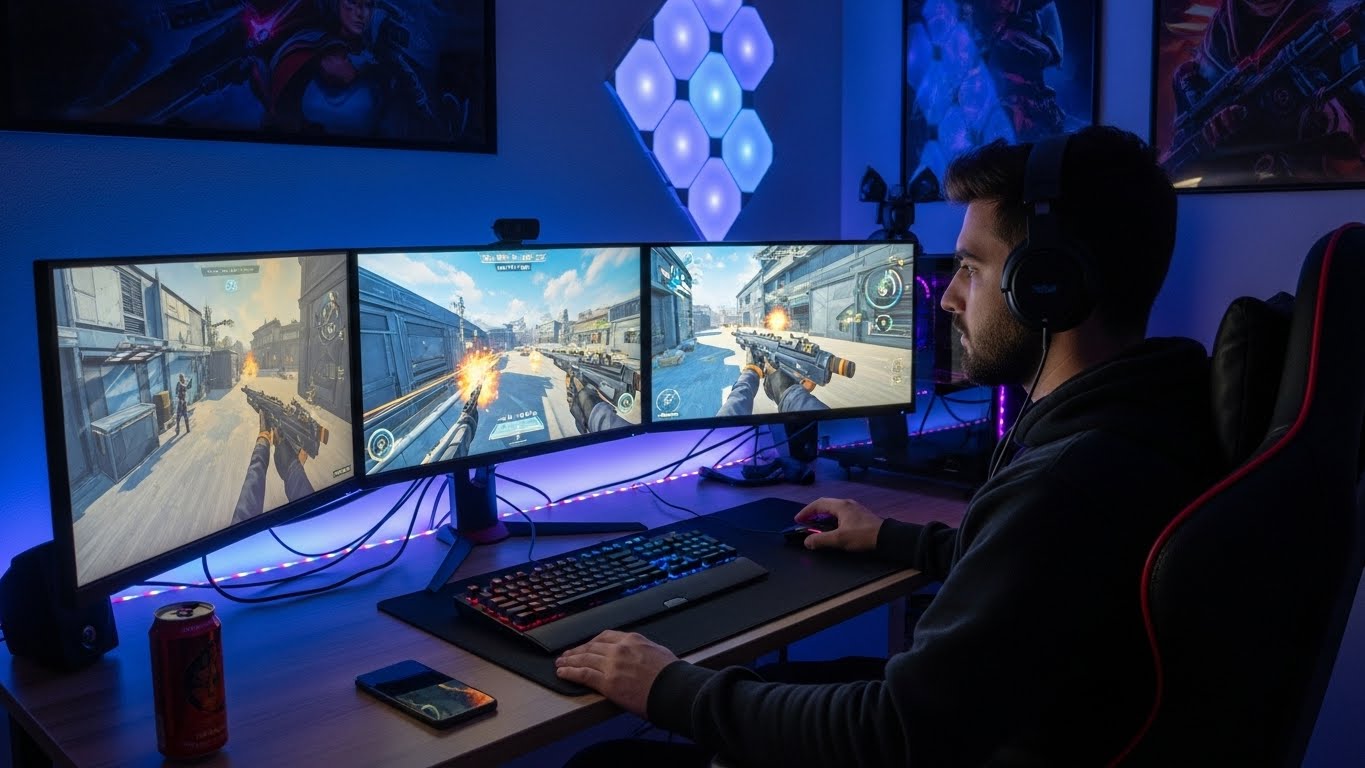
Gaming has transformed from a niche hobby into one of the most influential cultural and economic forces in the modern world. What was once a pastime for a small group of enthusiasts has now become a multibillion-dollar global industry that influences technology, art, entertainment, and even education. From early 8-bit games that could be played on chunky consoles to massive open-world experiences that stretch the limits of imagination, gaming has come a long way.
In this blog, we’ll explore the evolution of gaming, its cultural and social impact, the psychology behind why we play, and how the future of gaming could shape human interaction and creativity in profound ways.
The Early Days: The Birth of Video Games
The roots of gaming stretch back to the mid-20th century, when computer scientists began experimenting with interactive entertainment. One of the earliest known video games, “Tennis for Two,” was created in 1958 on an oscilloscope. Soon after, “Spacewar!” emerged in the 1960s, laying the groundwork for the video game industry.
The 1970s marked the commercial birth of gaming with the release of “Pong,” an arcade game that simulated table tennis using simple two-dimensional graphics. This was a revolutionary concept for its time. Players lined up at arcades to test their reflexes, and soon, gaming became a social phenomenon.
The first home consoles, like the Atari 2600, brought gaming into living rooms. Families could now play together without needing to visit an arcade. This marked a cultural shift — gaming was no longer just a technological curiosity; it was a shared experience.
The Golden Age of Arcades
The 1980s are often referred to as the “Golden Age of Arcade Games.” Titles like “Pac-Man,” “Donkey Kong,” “Space Invaders,” and “Galaga” defined this era. These games were not just entertainment; they became icons of pop culture. Characters like Mario and Pac-Man became global symbols recognized even by those who had never played a game before.
Arcades became gathering spots for young people, a space where competition and friendship flourished. Players would insert coins, master levels, and chase high scores displayed on bright LED leaderboards. This era created the foundation for what would later evolve into online leaderboards and esports.
The Golden Age also showed that gaming could evoke emotion, excitement, and community. It wasn’t just about pressing buttons — it was about skill, perseverance, and the joy of overcoming challenges.
The Home Console Revolution
By the late 1980s and early 1990s, home gaming consoles had taken over the market. Companies like Nintendo, Sega, and later Sony transformed gaming into a household staple. The Nintendo Entertainment System (NES) introduced classics like “Super Mario Bros.” and “The Legend of Zelda,” both of which redefined game design.
Nintendo emphasized creativity, storytelling, and fun, while Sega pushed for speed and attitude with their mascot Sonic the Hedgehog. These companies competed fiercely, driving innovation and pushing the limits of what video games could achieve.
The introduction of the PlayStation in 1994 marked a turning point. For the first time, 3D gaming became mainstream. Titles like “Final Fantasy VII,” “Metal Gear Solid,” and “Resident Evil” created immersive worlds with cinematic storytelling. Players no longer just played games — they lived through them.
The Rise of PC Gaming
While consoles dominated living rooms, personal computers became the platform for innovation and creativity. PC gaming offered flexibility, allowing players to modify games, create custom maps, and build online communities long before consoles could.
Games like “Doom,” “Half-Life,” “Warcraft,” and “The Sims” expanded what gaming could be. First-person shooters, real-time strategy, and life simulation games thrived on PCs. The introduction of multiplayer LAN parties and online matchmaking made gaming more social and competitive than ever before.
PC gaming also became a gateway to technological advancements. Better graphics cards, faster processors, and larger storage capacities were driven by the demands of gamers. This hardware race contributed to improvements across the entire tech industry.
Online Gaming: Connecting the World
The late 1990s and early 2000s brought one of the most transformative shifts in gaming history — online multiplayer gaming. With the rise of the internet, players could now compete and collaborate with others across the globe.
Games like “Counter-Strike,” “World of Warcraft,” and “Runescape” built massive online communities. These virtual worlds were more than games; they became digital societies where friendships, rivalries, and even economies emerged.
Online gaming redefined social interaction. Players could be anyone, anywhere, and connect with others who shared their passion. This was the beginning of a new era — one where gaming wasn’t limited by physical boundaries.
The Birth of Esports
Competition has always been a part of gaming, but esports turned it into a global spectacle. From small LAN tournaments to stadium-filling events, esports became one of the fastest-growing entertainment industries.
Games like “League of Legends,” “Dota 2,” “Counter-Strike: Global Offensive,” and “Fortnite” now attract millions of viewers worldwide. Professional gamers train for hours, compete for multimillion-dollar prizes, and build massive fan followings.
Esports has blurred the line between traditional sports and gaming. Teams have sponsors, coaches, analysts, and training regimens. Universities now offer esports scholarships, and mainstream broadcasters air tournaments alongside traditional sports.
The rise of streaming platforms also contributed to this boom. Gamers could showcase their skills to audiences in real time, creating an entirely new form of entertainment and career path.
The Power of Storytelling in Games
As technology evolved, so did the art of storytelling in games. What began as simple “save the princess” plots transformed into emotionally complex narratives rivaling Hollywood films.
Games like “The Last of Us,” “Red Dead Redemption 2,” and “God of War” showed that video games could explore deep human emotions — love, loss, sacrifice, and redemption. Interactive storytelling allows players to experience a narrative from the inside, making choices that shape outcomes and moral dilemmas.
This interactivity is what makes gaming unique. Unlike movies or books, games give players agency — the power to decide the story’s path. This emotional engagement creates a deeper connection between the player and the experience.
The Psychology of Gaming
Why do people play games? The reasons are as diverse as the players themselves.
Some play for competition, driven by the desire to test their skills and improve. Others play for relaxation, to escape the stress of daily life. Games also satisfy our innate need for achievement, progress, and mastery.
Psychologically, games are powerful motivators. They provide instant feedback, measurable progress, and clear goals — elements that many aspects of real life lack.
Socially, games foster a sense of belonging. Whether it’s joining a guild, forming a team, or simply chatting in a lobby, games connect people across cultures and generations. They offer a safe space for self-expression and creativity.
The Technological Advancements Behind Modern Gaming
Modern gaming wouldn’t exist without technological innovation. Graphics have evolved from pixelated blocks to hyper-realistic environments powered by ray tracing and advanced physics engines.
Virtual reality (VR) and augmented reality (AR) have taken immersion to the next level, allowing players to step inside the game world physically. Motion tracking, haptic feedback, and eye-tracking technologies enhance the sensory experience.
Artificial intelligence is also reshaping game design. AI-driven enemies, procedural generation, and adaptive storytelling create dynamic experiences that respond to player behavior.
Cloud gaming has begun to break down barriers further. Players can now stream high-end games on low-end hardware, making gaming more accessible than ever before. This democratization of gaming could redefine how we think about ownership and access to entertainment.
Mobile Gaming: A New Frontier
The rise of smartphones brought gaming to billions of people worldwide. Mobile gaming is now the largest segment of the gaming industry, accessible to anyone with a device.
Games like “Candy Crush,” “Clash of Clans,” “PUBG Mobile,” and “Genshin Impact” have proven that mobile platforms can offer both casual and deep experiences.
Mobile gaming also introduced new business models, such as free-to-play games supported by microtransactions. While controversial, this model has generated billions in revenue and allowed developers to reach massive audiences.
The accessibility of mobile gaming has made it a universal language. From children to grandparents, nearly everyone has played a game on their phone at some point. It’s a testament to gaming’s power to unite people across demographics.
Gaming and Education
Beyond entertainment, gaming has found a place in education. Educational games teach everything from math and history to coding and critical thinking.
Gamification — the use of game design elements in non-game contexts — has become a popular learning tool. It motivates students through rewards, challenges, and interactive experiences.
Games like “Minecraft: Education Edition” are used in classrooms to teach creativity, teamwork, and problem-solving. Simulation games help students understand complex systems like economics, biology, and engineering in engaging ways.
This fusion of learning and play shows that gaming can be more than a distraction — it can be a powerful educational ally.
Cultural Influence of Gaming
Gaming has become a cornerstone of modern culture. Video game soundtracks are performed by orchestras, characters appear in films, and gaming memes dominate the internet.
Fashion, language, and art have all absorbed gaming influences. Phrases like “level up,” “boss fight,” and “respawn” have entered everyday vocabulary.
Gaming conventions, cosplay events, and fan communities celebrate the creativity and passion of gamers worldwide. The industry has also fostered inclusivity, with more diverse representation in both games and the people who play them.
As gaming grows, it continues to shape how we see ourselves and the world around us.
Challenges and Criticisms
Despite its many achievements, gaming faces ongoing challenges. Issues like addiction, toxicity in online communities, and the exploitation of microtransactions have raised concerns.
Game development also involves grueling “crunch” periods where developers work excessive hours to meet deadlines. This has sparked debates about labor rights in the gaming industry.
Representation and inclusivity remain important topics. While progress has been made, there is still work to ensure that all players and cultures feel seen and respected in the games they play.
Balancing artistic freedom with social responsibility will be key to gaming’s future.
The Future of Gaming
The future of gaming promises even more breathtaking advancements. Artificial intelligence, virtual reality, and neural interfaces could make gaming indistinguishable from reality.
Imagine games where your thoughts control your character, or worlds that evolve based on your emotions. As hardware becomes smaller, faster, and more powerful, the boundaries between the digital and physical worlds will blur.
Metaverse-style platforms are also emerging — vast interconnected digital spaces where players can socialize, work, and create. Gaming will no longer be confined to entertainment; it could become the foundation of a new digital society.
The Economic Power of Gaming
The gaming industry now surpasses both the film and music industries in global revenue. It drives innovation across hardware, software, and media.
Indie developers, empowered by digital distribution, can now compete with large studios. Crowdfunding and community-driven development have made gaming more creative and diverse than ever before.
Gaming also fuels jobs in design, programming, art, music, marketing, and more. As technology evolves, new career paths will continue to emerge, proving that gaming is both an art and a science.
Conclusion: More Than Just a Game
Gaming is no longer just about entertainment — it’s about connection, creativity, and culture. It bridges generations, inspires innovation, and reflects the complexity of human imagination.
From the blinking lights of “Pong” to the cinematic worlds of modern blockbusters, gaming has evolved into a medium capable of telling profound stories, building communities, and changing lives.
As we look to the future, one thing is certain: gaming will continue to shape our world in ways we can only begin to imagine. It is not merely play — it is a reflection of who we are, what we dream of, and how we connect in an increasingly digital age.