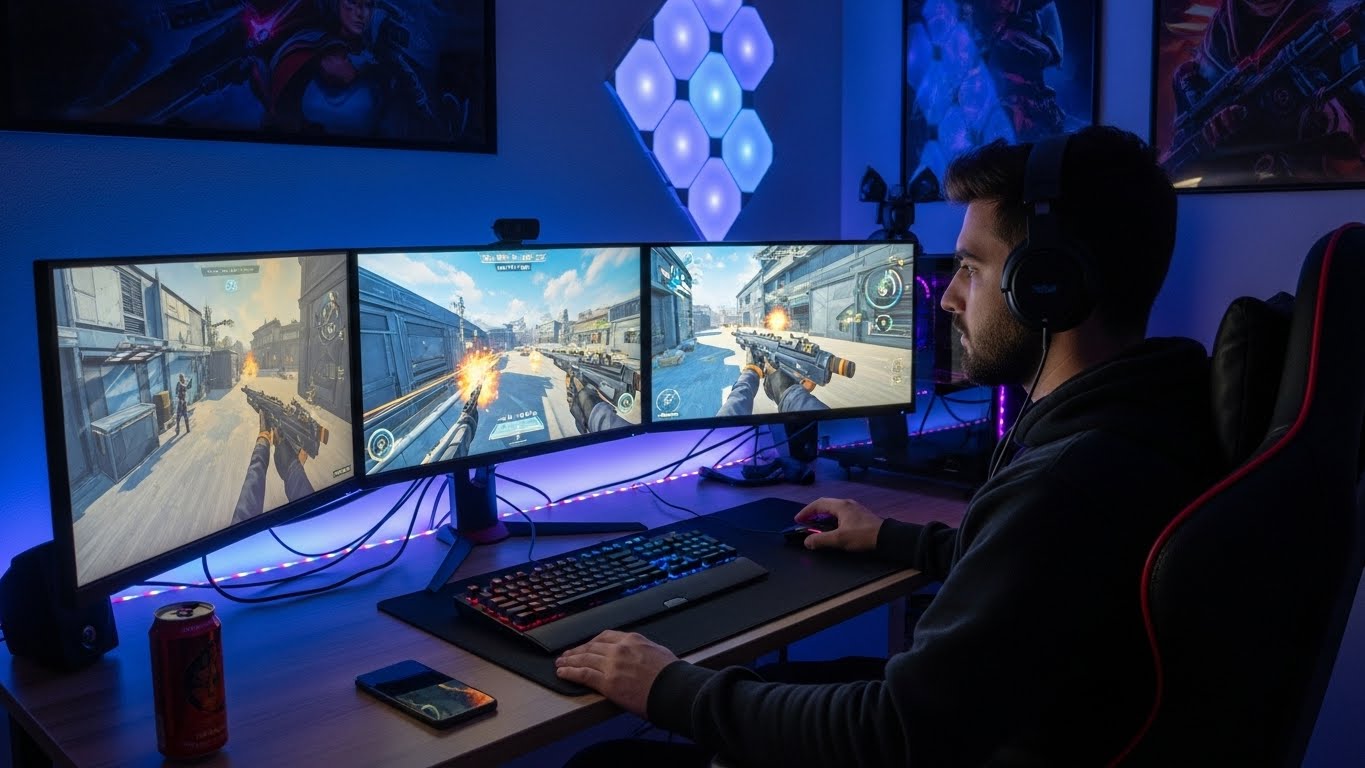
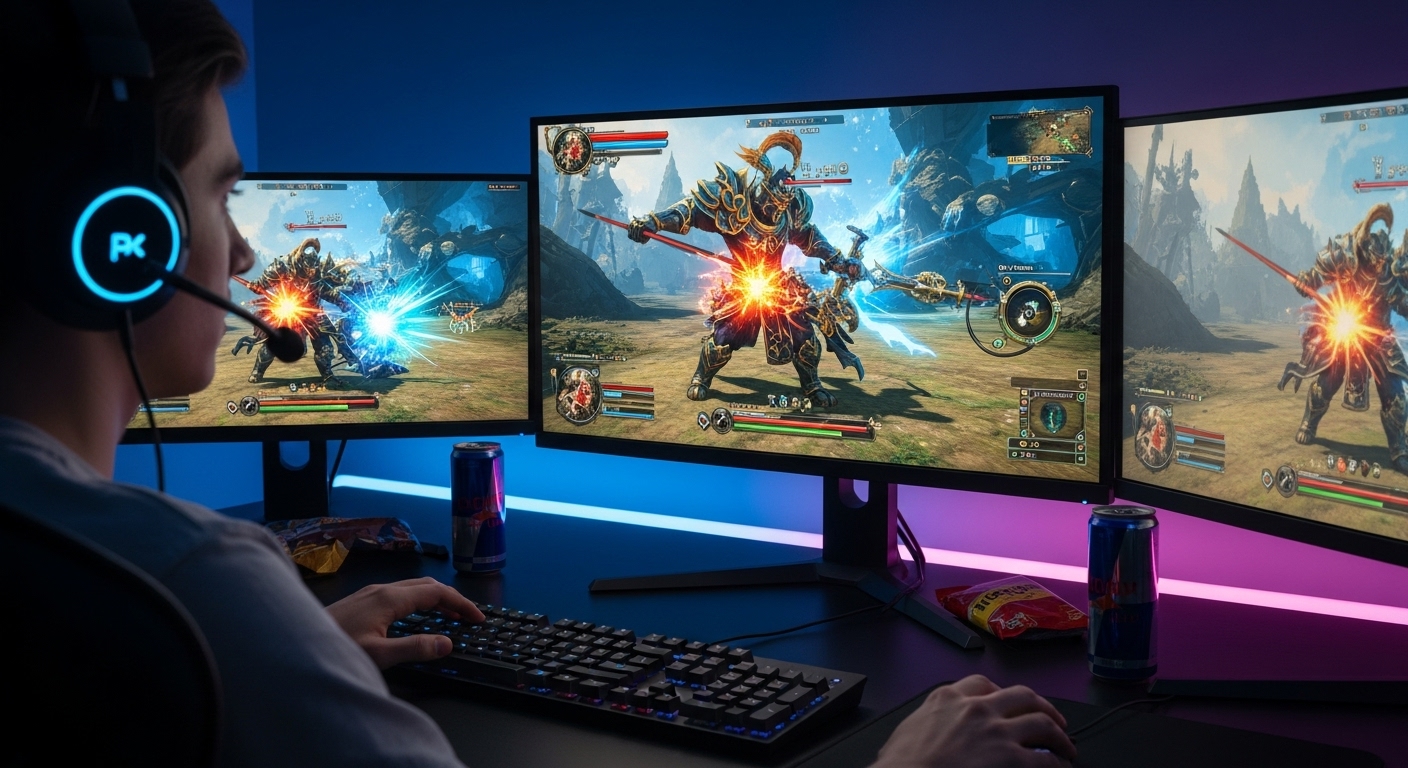
Gaming has come a long way since its early days, evolving from simple pixelated screens to highly immersive digital worlds that captivate millions of players worldwide. Today, gaming is not just a form of entertainment; it’s a culture, an art, and an industry that continues to shape our digital landscape. In this blog, we’ll take a closer look at the world of gaming, exploring its evolution, impact, and what the future might hold for this dynamic form of entertainment.
The Rise of Gaming: From Pixels to Realism
Gaming started in the 1950s and 1960s as basic experiments and tests on computers. The first commercially successful video game, Pong, hit arcades in 1972, setting the stage for the gaming revolution that would follow. Early video games were simple, often limited to two-dimensional graphics and basic mechanics. These games provided a novel form of entertainment, but the real magic happened when home consoles and personal computers brought the experience directly to living rooms and desktops.
In the 1990s, the gaming world witnessed a huge shift with the advent of 3D graphics and expansive game worlds. Titles like Super Mario 64 and The Legend of Zelda: Ocarina of Time pushed the boundaries of what games could be, offering players an open-world experience and more sophisticated gameplay. These early 3D titles laid the foundation for the immersive, visually stunning games we enjoy today.
Fast forward to the present, and gaming has reached a level of realism that was once unimaginable. Games now feature photorealistic graphics, lifelike animations, and intricate, vast open worlds. The power of modern consoles like the PlayStation 5 and Xbox Series X, combined with the technological advancements in gaming PCs, has brought virtual worlds to life in a way that feels almost tangible.
The Multiplayer Revolution: Connecting Players Across the Globe
While single-player games remain a cornerstone of the gaming world, the rise of multiplayer games has been one of the most significant shifts in the industry. The internet has enabled players to connect with one another, transcending geographic boundaries and creating a truly global gaming community.
Games like Fortnite, League of Legends, Call of Duty, and Minecraft have redefined what it means to be a gamer. These titles allow players to interact with others in real-time, whether they’re teaming up to complete missions or competing against one another in fast-paced combat. The social aspect of gaming has taken on a life of its own, with online communities, forums, and streaming platforms becoming integral parts of the experience.
The rise of esports has taken this even further, with professional gaming leagues offering large cash prizes and attracting millions of viewers worldwide. Esports has elevated gaming into a mainstream sport, with tournaments being broadcast live on platforms like Twitch and YouTube, drawing massive global audiences. The competitive aspect of gaming has turned it into a professional industry, with sponsorships, endorsements, and careers being built around gaming skills.
Single-Player Games: Immersive Worlds and Storytelling
Despite the dominance of multiplayer games, single-player titles continue to captivate audiences with their deep storytelling and immersive experiences. These games provide players with a personal journey, where they can explore vast worlds, interact with memorable characters, and experience rich narratives.
Recent examples like The Witcher 3: Wild Hunt, Red Dead Redemption 2, and God of War have set new standards in storytelling within video games. These games offer not only gameplay but also intricate plots that rival the best novels and films. Players are drawn into emotional narratives, where the choices they make affect the outcome, allowing for personalized experiences.
The success of single-player games proves that while multiplayer gaming is thriving, there is still a significant demand for high-quality, narrative-driven content. These games allow players to escape into fantasy worlds, experience epic adventures, and connect with characters on a deep emotional level. For many, the magic of gaming lies in these solo adventures, where every twist and turn of the story feels like their own.
The Technology Behind the Games: Innovation and Possibility
Gaming technology has advanced at a breathtaking pace, and the innovations in hardware and software continue to push the limits of what games can achieve. The shift to high-definition graphics, 4K resolution, and ray tracing has made virtual environments look more lifelike than ever before. With every new console release, the gap between what’s real and what’s virtual narrows, allowing players to experience photorealistic worlds with incredible detail and depth.
Virtual reality (VR) and augmented reality (AR) are also opening up new frontiers for gaming. VR headsets like the Oculus Rift and PlayStation VR provide players with fully immersive experiences, allowing them to physically interact with the game world. While VR gaming is still in its early stages, it offers a glimpse into the future of gaming, where players will be able to step inside the games they play.
Another exciting technological advancement is cloud gaming. Platforms like Google Stadia and Xbox Cloud Gaming allow players to stream games directly to their devices without the need for powerful hardware. This could significantly democratize access to gaming, making high-quality titles available to anyone with an internet connection, regardless of the device they own. As cloud technology improves, the possibilities for gaming will only continue to expand.
The Cultural Impact of Gaming: A Global Phenomenon
Gaming is no longer just a pastime; it has become a cultural force that shapes entertainment, art, and even social interactions. Video games have become a medium for storytelling, a platform for creativity, and a community-building tool. They have influenced movies, television shows, music, and fashion, with game-based content crossing over into mainstream pop culture.
Games like Fortnite and Minecraft have become cultural touchstones, with in-game events, collaborations, and merchandise reaching beyond the gaming community. The impact of gaming can also be seen in how it has shaped online streaming, with platforms like Twitch and YouTube becoming central hubs for gaming content, where players can watch others play, learn strategies, and join live discussions.
Moreover, gaming has increasingly been used as a form of artistic expression. Game developers are using the medium to explore complex themes, tackle social issues, and push the boundaries of creativity. Titles like Life is Strange and Detroit: Become Human examine topics such as identity, morality, and artificial intelligence, sparking conversations that extend beyond the gaming community into broader cultural discussions.
What Lies Ahead for Gaming: The Future is Bright
As we look to the future of gaming, the possibilities seem limitless. With the continued advancement of technology, we can expect even more lifelike graphics, more immersive experiences, and even more innovative gameplay. The growth of VR and AR will likely lead to fully realized virtual worlds that players can explore in new and exciting ways.
Cloud gaming could redefine how we access and play games, making it easier than ever to jump into the latest titles without the need for expensive hardware. Additionally, artificial intelligence and machine learning could lead to even smarter game environments, where every decision you make is met with a unique response from the game world.
Esports will continue to expand, with more tournaments, sponsorships, and global recognition. And with gaming’s cultural influence growing, it’s likely that we will see more collaborations between game developers and other industries like film, music, and fashion.
Conclusion: Gaming as a New Form of Expression
Gaming has transformed from a simple hobby to a global industry that touches nearly every aspect of modern life. Whether through immersive single-player adventures, social multiplayer experiences, or competitive esports, gaming offers something for everyone. It’s not just about playing games; it’s about living within them, experiencing new worlds, and connecting with others who share the same passion.
As the industry continues to evolve, the future of gaming looks more exciting than ever. With new technologies, innovative gameplay, and an ever-expanding cultural influence, gaming will continue to shape our digital world in ways we can only begin to imagine. The adventure is just beginning.