Introduction: Gaming as More Than Just Entertainment
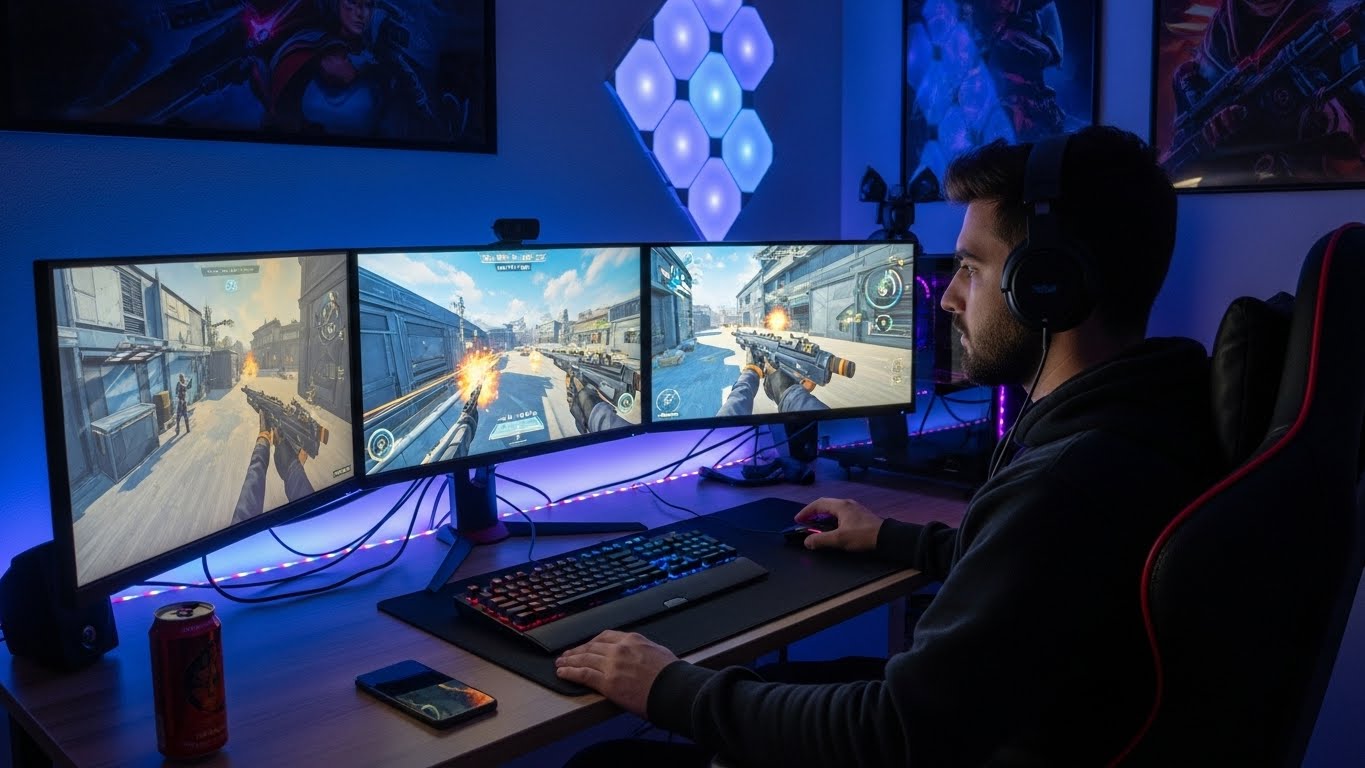
In the modern era, gaming has evolved far beyond a casual pastime. What was once considered a niche hobby for children and teenagers has grown into a global phenomenon, influencing culture, technology, and even human behavior. Today, gaming spans multiple platforms, including consoles, PCs, and mobile devices, and caters to a wide demographic that ranges from young enthusiasts to adults in their forties and fifties. Gaming is no longer just about escaping reality; it has become a medium through which people explore creativity, build social connections, and develop cognitive skills.
The Evolution of Gaming
The history of gaming is a journey of innovation and adaptation. Early video games, such as Pong and Space Invaders, were simple in graphics and gameplay, yet they sparked curiosity and excitement. Over the decades, advancements in technology transformed gaming into immersive experiences. The introduction of 3D graphics, realistic sound effects, and online multiplayer capabilities redefined how people interacted with games. The industry’s growth has also shifted societal perceptions, moving gaming from a perceived waste of time to a respected form of art and entertainment.
Gaming as a Social Platform
One of the most significant developments in gaming is its role as a social platform. Multiplayer online games, like role-playing and strategy games, enable players from across the world to connect, collaborate, and compete. Gamers often form communities where friendships are forged and teamwork is honed. These social interactions extend beyond the game itself, fostering meaningful relationships and even professional networks. Unlike traditional forms of entertainment, gaming allows for active participation, making it a shared experience rather than a passive activity.
The Cognitive Benefits of Gaming
Beyond socialization, gaming has been linked to various cognitive benefits. Strategic games require problem-solving, planning, and decision-making under pressure, which can enhance mental agility. Puzzle-based and simulation games encourage creative thinking and adaptability, while fast-paced action games improve hand-eye coordination and reflexes. Studies have suggested that gamers often demonstrate higher levels of attention, memory retention, and spatial reasoning compared to non-gamers. Therefore, gaming is not merely a recreational activity; it can also serve as a tool for cognitive development and mental stimulation.
The Role of Storytelling in Games
Modern games are increasingly celebrated for their storytelling. Just like movies or novels, games now offer narratives with complex characters, emotional arcs, and immersive worlds. Story-driven games allow players to experience different perspectives and explore moral dilemmas in ways that other media cannot. Players actively shape outcomes, which provides a sense of agency and deep emotional engagement. The power of interactive storytelling highlights gaming as a form of art that challenges conventional boundaries and engages the imagination in unique ways.
Gaming and Personal Identity
For many players, gaming is a means of self-expression. Character customization, world-building, and role-playing allow individuals to explore aspects of their personality or even experiment with new identities. Online avatars and virtual environments provide safe spaces where players can test boundaries, express creativity, and gain confidence. The psychological impact of these experiences is profound, fostering self-awareness, empathy, and a sense of achievement. Gaming, therefore, is not just entertainment; it can also be a journey of personal growth.
Esports and the Rise of Competitive Gaming
Competitive gaming, or esports, has transformed gaming into a legitimate profession. Players dedicate hours of practice to compete in tournaments with prize pools reaching millions of dollars. Esports has its own culture, with fan followings, commentary, and sponsorships similar to traditional sports. The rise of esports has also created career opportunities beyond playing, including coaching, streaming, and content creation. The professionalization of gaming demonstrates its influence on modern society, showcasing the dedication, skill, and strategic thinking involved.
The Intersection of Technology and Gaming
Technological advancements continue to push the boundaries of what gaming can achieve. Virtual reality (VR) and augmented reality (AR) are creating immersive worlds where players can experience environments in lifelike detail. Cloud gaming allows access to high-quality games without expensive hardware, making gaming more accessible than ever. Artificial intelligence is enhancing game design, enabling dynamic and responsive gameplay. As technology evolves, gaming becomes more than just entertainment—it becomes a window into new experiences, simulations, and even educational tools.
Gaming and Emotional Resilience
Games often present challenges that require persistence, strategic thinking, and adaptability. Overcoming difficult levels or completing complex tasks can foster resilience and patience. Gaming also provides a healthy outlet for stress relief, offering players an opportunity to escape daily pressures in a controlled environment. The combination of challenge and reward in games mirrors real-life problem-solving, making gaming an unexpected but effective tool for emotional growth.
The Impact of Gaming on Culture
Gaming has a profound impact on popular culture, influencing music, fashion, and storytelling across media. Iconic game characters and franchises have become cultural symbols, shaping trends and inspiring art. Memes, fan art, and conventions demonstrate the collaborative creativity of gaming communities. Moreover, games often explore societal issues, ethics, and history, subtly educating players while entertaining them. The cultural footprint of gaming is undeniable, proving that it is not only a pastime but a reflection of human creativity and societal evolution.
The Future of Gaming
Looking ahead, gaming is poised to become even more integrated into daily life. Advances in artificial intelligence, VR, and AR will create increasingly realistic and immersive experiences. Games may evolve into platforms for learning, social interaction, and even professional training. As technology and storytelling continue to merge, the line between gaming and reality will blur, offering experiences that are both entertaining and transformative. The future of gaming is not just about better graphics or faster processors—it is about creating worlds that challenge, inspire, and connect people in unprecedented ways.
Conclusion: Gaming as a Transformative Experience
Gaming is no longer a simple form of entertainment; it is a multifaceted medium with the power to educate, connect, and inspire. From cognitive development and emotional resilience to social engagement and cultural impact, the benefits of gaming extend far beyond the screen. As technology advances and games continue to evolve, their role in society will only deepen, offering unique opportunities for creativity, personal growth, and human connection. Gaming has transcended its humble beginnings and emerged as a transformative force in modern life, proving that beyond the pixels lies a world of potential.