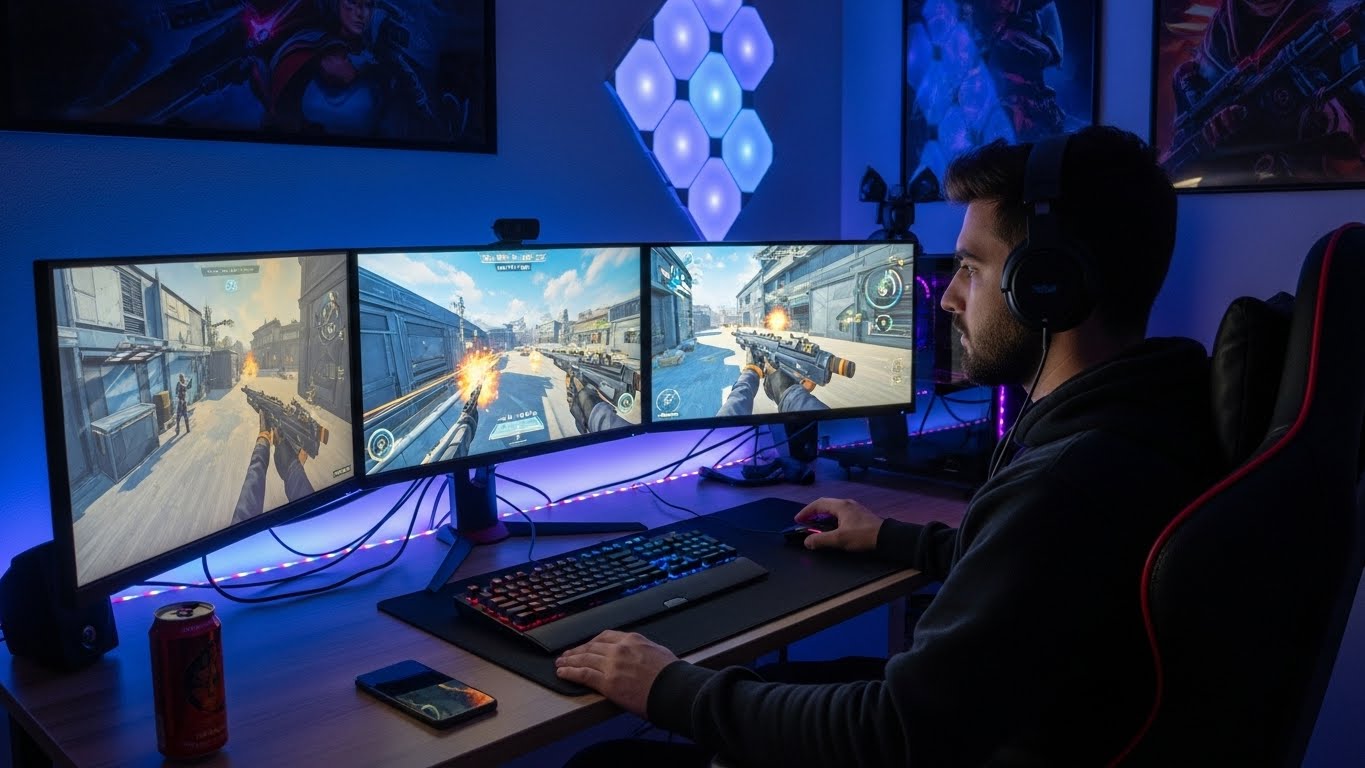

In the last few decades, gaming has transitioned from a niche hobby to a global phenomenon that has reshaped how we view entertainment. With millions of players worldwide, video games have transcended their role as mere pastimes and evolved into immersive experiences that offer entertainment, education, and even socialization. This post will explore the rich history of gaming, its rapid evolution, the cultural impact it has had on society, and where the future of gaming might take us.
The Birth of Video Games: A Humble Beginning
The roots of gaming can be traced back to the early 1950s and 1960s. The earliest video games were simple, experimental designs made by scientists and researchers. One of the first notable video games was Tennis for Two (1958), created by physicist William Higinbotham on an oscilloscope, and later Spacewar! (1962), created by Steve Russell and others at MIT. These early games were far from the polished experiences we see today, but they were a sign of things to come.
In 1972, Atari revolutionized the gaming landscape by releasing Pong, one of the first commercially successful arcade games. This marked the beginning of the video game industry as a legitimate form of entertainment. At the time, Pong was a basic table-tennis simulation, but its simplicity and accessibility paved the way for future development.
The Golden Age of Arcades: The 1980s
The 1980s are often referred to as the “Golden Age” of arcade gaming. Arcade machines became a staple of entertainment venues, and iconic titles such as Pac-Man, Donkey Kong, and Space Invaders captured the imagination of millions. These games were a significant step forward in terms of gameplay, graphics, and narrative. Pac-Man (1980) became a cultural phenomenon, with its distinctive characters and catchy gameplay.
As the arcade boom continued, home consoles began to emerge, providing a more convenient and cost-effective way for people to play video games in their homes. In 1985, Nintendo released the Nintendo Entertainment System (NES), which would become one of the most successful gaming consoles of all time. The NES revolutionized home gaming, with games like Super Mario Bros. setting new standards for game design and player engagement.
The 1990s: The Rise of 3D and the Shift to Home Consoles
The 1990s marked a pivotal point in the evolution of gaming. The introduction of 3D graphics brought a whole new dimension to video games. Consoles like the Sony PlayStation, Sega Saturn, and Nintendo 64 were at the forefront of this technological shift, allowing developers to create expansive, three-dimensional worlds for players to explore. This new era of gaming brought with it iconic titles such as Super Mario 64, The Legend of Zelda: Ocarina of Time, and Final Fantasy VII, which set benchmarks in terms of storytelling, gameplay mechanics, and world-building.
In this decade, gaming also began to diversify, with genres such as first-person shooters (DOOM, GoldenEye 007), fighting games (Street Fighter II), and real-time strategy (Command & Conquer) becoming increasingly popular. The 1990s was also a time of rapid expansion for online multiplayer gaming, with titles like Warcraft and Quake introducing competitive online play that would become a staple of the industry in the following years.
The 2000s: High-Definition Gaming and the Rise of Online Play
The 2000s marked the mainstream arrival of high-definition gaming, with consoles such as the PlayStation 3, Xbox 360, and Wii pushing the boundaries of graphical fidelity. Players could now experience games in stunning HD resolution, with lifelike graphics and smooth gameplay. Titles like Halo 3, Grand Theft Auto IV, and The Elder Scrolls V: Skyrim demonstrated the power of these new systems and set new standards for the gaming industry.
Perhaps the most significant shift in gaming during the 2000s was the rise of online multiplayer gaming. Broadband internet became more widely available, allowing players to connect to vast online communities. Games like World of Warcraft, Call of Duty 4: Modern Warfare, and League of Legends ushered in an era of competitive, team-based gaming that would continue to grow in popularity.
The 2000s were also a time of major innovation in game design. The concept of open-world games—vast, immersive environments with non-linear gameplay—became popular with titles like Grand Theft Auto III and The Elder Scrolls III: Morrowind. These games allowed players to explore massive virtual worlds, complete quests at their own pace, and shape their own stories.
The 2010s: The Age of Indie Games and Virtual Reality
By the 2010s, the gaming industry had become one of the largest and most influential forms of entertainment. As technology advanced further, the distinction between high-end console gaming and PC gaming became more apparent, with gaming PCs capable of running incredibly detailed and immersive worlds. At the same time, the advent of mobile gaming brought new opportunities for casual players, with games like Angry Birds, Candy Crush, and Clash of Clans becoming global sensations.
One of the most notable trends of the 2010s was the rise of indie games. Smaller developers, empowered by digital distribution platforms like Steam, were able to create unique and innovative games that often offered more experimental or niche experiences. Titles like Minecraft, Stardew Valley, Hollow Knight, and Celeste demonstrated that games didn’t have to come from big-budget studios to make a significant impact. These indie games not only found commercial success but also garnered critical acclaim for their creativity, storytelling, and gameplay.
Another defining trend of the 2010s was the emergence of virtual reality (VR). While VR had been around for decades, it wasn’t until the release of the Oculus Rift in 2016 and other VR headsets that the technology became accessible to mainstream gamers. VR promised to take immersion to the next level, allowing players to experience games in a fully three-dimensional environment. While VR gaming was still in its infancy by the end of the decade, games like Beat Saber, Half-Life: Alyx, and The Walking Dead: Saints & Sinners showcased its potential.
The Future of Gaming: Cloud Gaming and Artificial Intelligence
As we enter the 2020s, the future of gaming looks incredibly exciting, with new technologies continuing to push the boundaries of what’s possible. One of the most significant developments in recent years has been the rise of cloud gaming. Services like Google Stadia, Microsoft’s Xbox Cloud Gaming (formerly Project xCloud), and NVIDIA GeForce Now allow players to stream games directly to their devices without needing powerful hardware. This opens up gaming to a broader audience, as users can play high-quality games on smartphones, tablets, and laptops without investing in expensive gaming PCs or consoles.
Another major development in gaming technology is the use of artificial intelligence (AI). AI has already begun to enhance the gaming experience by creating more intelligent and adaptive non-playable characters (NPCs) and procedurally generated content. Games like Red Dead Redemption 2 and The Last of Us Part II have set new standards for storytelling, with NPCs reacting to the player’s actions in more nuanced and realistic ways. In the future, AI could play an even greater role in dynamically shaping game worlds, creating personalized narratives, and enabling more immersive and reactive gameplay.
The potential of augmented reality (AR) is another exciting frontier. While AR has gained popularity through mobile games like Pokémon GO, its full potential in gaming has yet to be realized. In the future, AR could blur the lines between the virtual and real worlds, enabling players to interact with digital characters and environments in their physical spaces.
The Impact of Gaming on Culture
The rise of gaming has had a profound impact on global culture. Video games are now a mainstream form of entertainment, surpassing even movies and music in terms of revenue generation. Major gaming franchises like Fortnite, Minecraft, and League of Legends have become cultural touchstones, with millions of players participating in online communities, esports competitions, and live-streamed events.
Gaming has also played a significant role in shaping social interactions, particularly in the digital age. Online multiplayer games have provided a platform for people to connect with friends and strangers alike. The rise of esports has turned gaming into a competitive sport, with professional gamers competing for millions of dollars in prize money. Streaming platforms like Twitch and YouTube Gaming have allowed gamers to share their experiences with a global audience, further cementing gaming’s role as a major cultural force.
Conclusion: The Ever-Evolving Landscape of Gaming
Gaming has come a long way since its humble beginnings. From pixelated arcade machines to ultra-realistic open worlds, video games have continually pushed the boundaries of what’s possible in entertainment. As new technologies like cloud gaming, virtual reality, and AI continue to develop, the future of gaming looks brighter than ever.
Whether you’re a casual player or a die-hard enthusiast, there has never been a better time to be part of the gaming community. Gaming is no longer just about playing—it’s about experiencing, connecting, and engaging with virtual worlds in ways that were once unimaginable. The evolution of gaming is far from over, and with every new generation of hardware and software, we move closer to a future where games are not just played—they are lived.