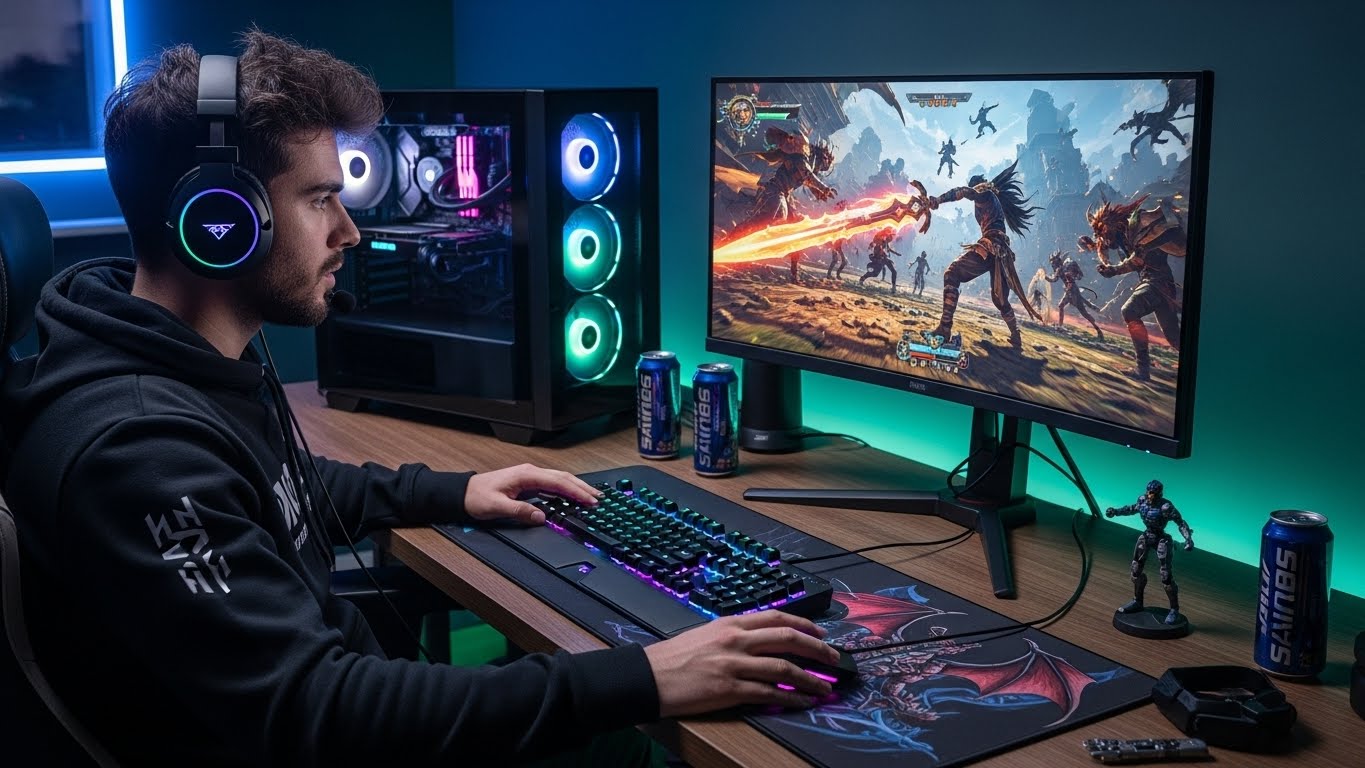
In the span of a few decades, gaming has evolved from a niche hobby to one of the most significant forms of entertainment in the world. What was once limited to arcade machines and early home consoles has now expanded to a multi-billion dollar industry, with millions of players across the globe. The transformation of gaming has been nothing short of revolutionary, and it has had an impact far beyond the screen. From shaping social dynamics to influencing technological development, gaming has become a cultural and economic powerhouse. This blog post will explore the fascinating journey of gaming, from its inception to its current state, and its ever-growing influence on the modern world.
The Birth of Video Games: A Simple Start
The origins of video games can be traced back to the late 1950s, when engineers and computer scientists began experimenting with interactive entertainment. The first-known video game, Tennis for Two, was developed in 1958 by physicist William Higinbotham, though it was more of an experimental display than a commercially released product. However, this early example of interactive entertainment would pave the way for future innovations in the gaming world.
In 1972, the gaming world saw the launch of Pong, developed by Nolan Bushnell and Atari, which would become the first commercially successful video game. Pong, a simple two-dimensional simulation of ping-pong, caught the public’s attention and marked the beginning of the arcade era. Arcades soon became cultural hubs where players would flock to engage in friendly competition, setting the foundation for what would become a booming global industry.
The Home Console Revolution: Gaming Comes to the Living Room
While arcades were an important part of early gaming culture, the true transformation of the gaming experience began in the late 1970s and early 1980s with the advent of home consoles. The introduction of the Atari 2600 in 1977 marked the first significant shift in how people interacted with video games. The Atari 2600 allowed players to play a variety of games at home using cartridges, which was a revolutionary idea at the time. This shift allowed people to enjoy video games in the comfort of their living rooms rather than having to visit arcades.
Following Atari’s success, Nintendo entered the scene in the mid-1980s with the release of the Nintendo Entertainment System (NES) in 1985. The NES would go on to reshape the gaming landscape, introducing iconic franchises such as Super Mario Bros. and The Legend of Zelda, which would become cornerstones of the gaming industry. These games offered players an experience that was more than just entertainment—they introduced immersive worlds and introduced narrative-driven gameplay that was relatively new to the medium.
Nintendo’s success in the 1980s marked the beginning of a new era for gaming. The home console was no longer just a novelty; it was now a mainstream form of entertainment that families could enjoy together. The gaming industry was quickly becoming a fixture in modern life.
The Rise of 3D Gaming: A New Dimension
The 1990s was a defining decade for gaming. The introduction of 3D graphics and more powerful hardware allowed games to evolve in ways that were previously unimaginable. With consoles like the Sony PlayStation and Nintendo 64, players were able to experience three-dimensional worlds that felt far more realistic than anything seen before. This era of gaming ushered in a new generation of developers who were able to create complex and immersive game worlds.
One of the most notable games from this period was Super Mario 64 (1996), which redefined platforming games by offering players full 3D environments to explore. This was a significant leap forward from the 2D side-scrollers of the previous generation, and it set the standard for future platformers. The Legend of Zelda: Ocarina of Time (1998) was another groundbreaking title from the same era, offering an expansive, open world that was unlike anything seen before.
Alongside these milestones, the PlayStation introduced gamers to cinematic experiences like Final Fantasy VII (1997), which blended traditional turn-based combat with an emotionally charged narrative. The game’s ability to draw players into its story was a sign of the increasing sophistication of video games as an art form.
The 1990s also saw the rise of online multiplayer gaming. As the internet became more accessible, games like Warcraft II and StarCraft allowed players to compete against one another over the web. These games laid the groundwork for what would become one of the most important aspects of gaming in the modern era: online multiplayer.
The Emergence of Online Gaming: Connecting the World
As broadband internet connections became more common in the early 2000s, online multiplayer gaming exploded in popularity. The release of Xbox Live in 2002 marked a major milestone in the history of online gaming. Players could now connect with others from around the world and compete in real-time, a development that would change the way games were played.
Games like Halo 2 and World of Warcraft became synonymous with online multiplayer gaming. Halo 2 offered a fast-paced, competitive experience that could be enjoyed with friends and strangers alike. World of Warcraft, on the other hand, introduced players to the world of massively multiplayer online role-playing games (MMORPGs), where thousands of players could interact within a single, persistent world. These games not only changed the way people played games—they also changed the way people socialized, forming tight-knit communities of players who bonded over their shared love for the game.
The rise of streaming platforms like Twitch further amplified the social aspect of gaming. Gamers could now watch others play live, engage in conversations with streamers, and participate in gaming communities. The ability to watch professional players compete in online tournaments helped solidify esports as a legitimate competitive activity, further legitimizing gaming as both a hobby and a profession.
The Rise of Mobile Gaming: Gaming Anywhere, Anytime
By the late 2000s, smartphones and tablets began to revolutionize the gaming industry in a way that no one had anticipated. The launch of the iPhone in 2007, followed by the introduction of app stores, opened the door for a new type of gaming: mobile gaming. Mobile games were now accessible to anyone with a smartphone, and millions of players around the world began downloading games like Angry Birds, Candy Crush Saga, and Clash of Clans.
Mobile gaming’s accessibility was one of its biggest strengths. Games could now be played anywhere—on the bus, during lunch breaks, or while waiting for an appointment. This convenience turned gaming into a ubiquitous form of entertainment that could be enjoyed by people who might never have picked up a console or PC. Furthermore, the free-to-play model, where games were offered for free but monetized through in-app purchases, proved to be highly successful. It became clear that mobile gaming was no longer just a casual pastime but an integral part of the gaming ecosystem.
While mobile games like Pokémon GO and Subway Surfers offered bite-sized experiences, mobile platforms also allowed developers to experiment with innovative gameplay mechanics and augmented reality. The ability to combine the digital world with the physical environment, as seen in Pokémon GO, demonstrated the potential of mobile gaming to evolve beyond traditional experiences.
The Future of Gaming: Virtual Reality, Artificial Intelligence, and Beyond
As gaming technology continues to evolve, the next frontier is already beginning to take shape: virtual reality (VR) and artificial intelligence (AI). VR gaming, with devices like the Oculus Rift and PlayStation VR, allows players to step into fully immersive, 3D environments. VR gaming has already made waves with titles like Beat Saber and Half-Life: Alyx, which give players a truly interactive experience that goes far beyond what was possible with traditional gaming.
Artificial intelligence is also playing an increasingly important role in shaping the future of gaming. AI-driven characters can react to player actions in more dynamic and realistic ways, creating more immersive and challenging gameplay experiences. Games are becoming smarter, more responsive, and more adaptive, allowing for personalized experiences based on how players interact with the game world.
Moreover, the rise of cloud gaming is beginning to change how players access and experience games. With services like Google Stadia and Microsoft’s Xbox Cloud Gaming, players can stream high-quality games directly to their devices without needing expensive hardware. Cloud gaming could be the key to making high-performance gaming more accessible to a wider audience, as players no longer need powerful PCs or consoles to enjoy cutting-edge games.
The Cultural Impact of Gaming
Gaming has evolved into much more than just a form of entertainment—it has become a cultural phenomenon. Video games have influenced music, movies, fashion, and even language. Characters like Mario, Link, and Master Chief are as iconic as any figure from traditional media. The rise of esports has created a new type of celebrity, with professional gamers gaining global recognition and building large fan bases.
Gaming also fosters unique communities. Whether it’s through online multiplayer games, fan forums, or streaming platforms like Twitch, players can connect with others who share their passion. These communities often extend beyond gaming itself, forming friendships, supporting charity events, and influencing broader cultural trends.
Conclusion: Gaming as the Future of Entertainment
The evolution of gaming has been a remarkable journey. What began as a simple pastime for a few has grown into a massive global industry that influences nearly every aspect of modern life. From the rise of home consoles to the explosion of online multiplayer, mobile gaming, and virtual reality, the gaming world continues to evolve and expand in new and exciting directions.