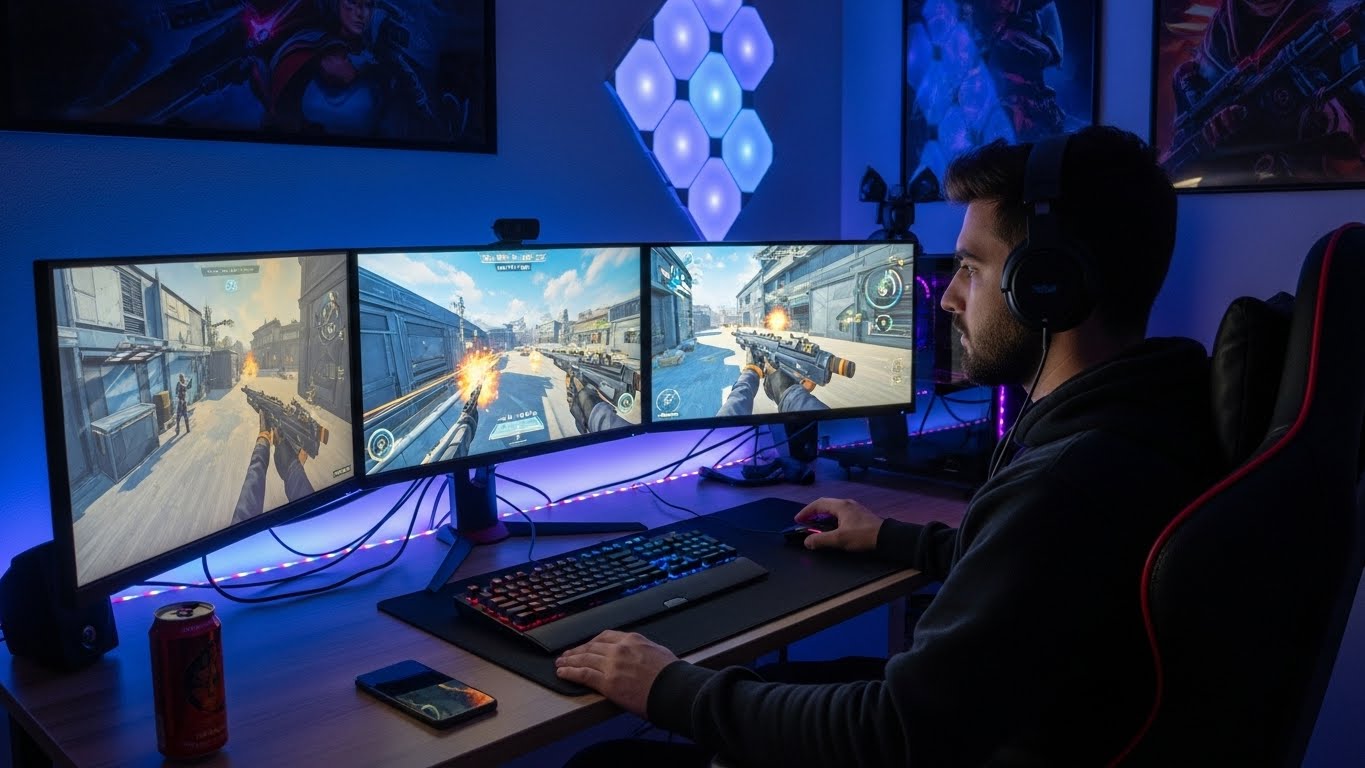

Gaming has transformed from a casual pastime into a powerful cultural phenomenon, influencing entertainment, technology, education, and social interaction. Once limited to arcades and basic consoles, gaming today offers immersive experiences that push the boundaries of imagination. In this blog, we explore the evolution of gaming, its impact on society, the rise of competitive esports, and the promising future of this dynamic industry.
The Early Days of Gaming
The story of gaming begins in the 1950s and 1960s with experiments in computer science. Early games like “Tennis for Two” and “Spacewar!” were primarily technological demonstrations, yet they captivated the imagination of those who played them. These simple, pixel-based games laid the foundation for the complex gaming worlds we enjoy today.
The 1970s introduced arcade gaming to the public. Games such as “Pong” and “Space Invaders” brought competitive play into public spaces, creating a social aspect that would define the future of gaming. Players were not just engaging with machines; they were part of a growing community, striving for high scores and shared experiences.
Home Consoles Revolutionize Play
The late 1970s and 1980s saw the arrival of home gaming consoles, bringing video games from arcades directly into living rooms. The Atari 2600 became a household name, followed by iconic consoles from Nintendo and Sega. Titles like “Super Mario Bros.” and “Sonic the Hedgehog” became cultural icons, shaping generations of gamers.
Home consoles allowed for deeper storytelling and gameplay innovation. Developers could craft expansive worlds, engaging narratives, and memorable characters. This era marked a shift from simple, score-based games to immersive experiences that required strategy, skill, and imagination.
Technological Advancements in Gaming
Gaming has always been closely tied to technological progress. Early games were limited to simple graphics and sound. Today, advancements in hardware and software have transformed gaming into a visually stunning, highly interactive art form. The introduction of 3D graphics in the 1990s enabled players to navigate realistic virtual environments, while modern gaming engines deliver breathtaking visuals, dynamic lighting, and lifelike animations.
High-performance consoles, gaming PCs, and virtual reality systems now allow developers to create expansive, interactive worlds. Realistic physics, artificial intelligence, and detailed graphics provide players with experiences that blur the line between reality and fantasy.
The Social Aspect of Gaming
Modern gaming has evolved into a deeply social activity. Online multiplayer games connect millions of players worldwide, fostering communities and encouraging collaboration and competition. Titles such as “World of Warcraft,” “Fortnite,” and “Minecraft” allow players to interact, communicate, and build relationships within virtual worlds.
Gaming communities extend beyond gameplay. Social media, streaming platforms, and forums enable players to share strategies, celebrate achievements, and connect over shared interests. This social connectivity has transformed gaming from an individual hobby into a global phenomenon that bridges cultures and generations.
The Rise of Competitive Gaming
Esports has emerged as a major force in the gaming world. Competitive gaming transforms traditional play into professional competition, with tournaments, sponsorships, and international recognition. Games like “League of Legends,” “Dota 2,” and “Counter-Strike” have established professional leagues where players train rigorously and compete for substantial prizes.
Esports has not only created careers for professional gamers but also fostered skill development in areas such as strategic thinking, teamwork, and quick decision-making. The global popularity of esports continues to grow, attracting fans and participants from diverse backgrounds.
Gaming as a Learning Tool
Gaming is more than entertainment; it is an educational tool. Educational games provide interactive methods for learning complex subjects like mathematics, science, and history. Gamification, the integration of game mechanics into non-gaming contexts, is widely used in schools and professional training to boost engagement and retention.
Strategy and simulation games encourage problem-solving, critical thinking, and resource management. Players learn to make decisions, plan ahead, and adapt to changing conditions, skills that translate to real-world scenarios. Gaming, therefore, can combine fun with cognitive and personal growth.
Virtual Reality and Immersive Gaming
Virtual reality (VR) and augmented reality (AR) are revolutionizing how we experience games. VR immerses players in 360-degree digital worlds, offering experiences that engage multiple senses and provide a strong sense of presence. Games like “Half-Life: Alyx” demonstrate the potential for highly interactive and realistic gameplay that requires physical movement and spatial awareness.
AR overlays digital elements onto the real world, merging physical exploration with virtual interaction. Games such as “Pokémon Go” have shown how AR can motivate players to explore their environment while interacting with digital content. These technologies are expanding the boundaries of what gaming can achieve, creating experiences that are more immersive and engaging than ever before.
Psychological Benefits and Challenges
Gaming can have significant psychological benefits. It improves hand-eye coordination, enhances problem-solving abilities, and boosts multitasking skills. Many players experience satisfaction and motivation from completing challenges, fostering confidence and resilience.
However, gaming also requires balance. Excessive play can lead to negative outcomes such as social withdrawal or gaming addiction. Understanding healthy gaming habits is essential to maximize benefits while minimizing risks. Moderation and mindful engagement ensure that gaming remains a positive and enriching activity.
The Cultural Influence of Gaming
Gaming has become a central part of modern culture. It influences music, movies, fashion, and art, while providing a platform for storytelling and creative expression. Video games explore diverse narratives, from historical epics to futuristic science fiction, allowing players to experience perspectives and worlds beyond their own.
Furthermore, gaming communities contribute to cultural dialogue and identity formation. Fans engage in discussions, fan art, and content creation, turning games into shared cultural touchstones. Gaming is no longer just a pastime; it is a lens through which culture, creativity, and community intersect.
The Future of Gaming
The future of gaming promises continued innovation and expansion. Cloud gaming allows players to access high-quality games without expensive hardware, while artificial intelligence enhances gameplay through adaptive challenges and dynamic storylines. Developers are exploring multi-sensory experiences, combining sight, sound, touch, and even scent to create fully immersive virtual worlds.
As technology advances, gaming will continue to blur the line between reality and imagination, offering new forms of entertainment, social interaction, and education. The possibilities are limited only by creativity, and the gaming landscape is poised to become even more engaging, diverse, and transformative.
Conclusion
Gaming has grown from simple pixelated experiments to a global cultural force that entertains, educates, and connects people. From early arcade machines to home consoles, from online multiplayer communities to professional esports, gaming continues to evolve in scope and influence. Its technological advancements, social impact, and educational potential make it a unique and powerful medium.
The evolution of gaming reflects both human creativity and technological progress. As new innovations emerge, the boundaries of play will continue to expand, offering experiences that inspire, challenge, and unite players worldwide. Gaming is no longer just entertainment—it is a transformative force shaping culture, society, and the digital future.