
Introduction: Gaming – More Than Just a Hobby
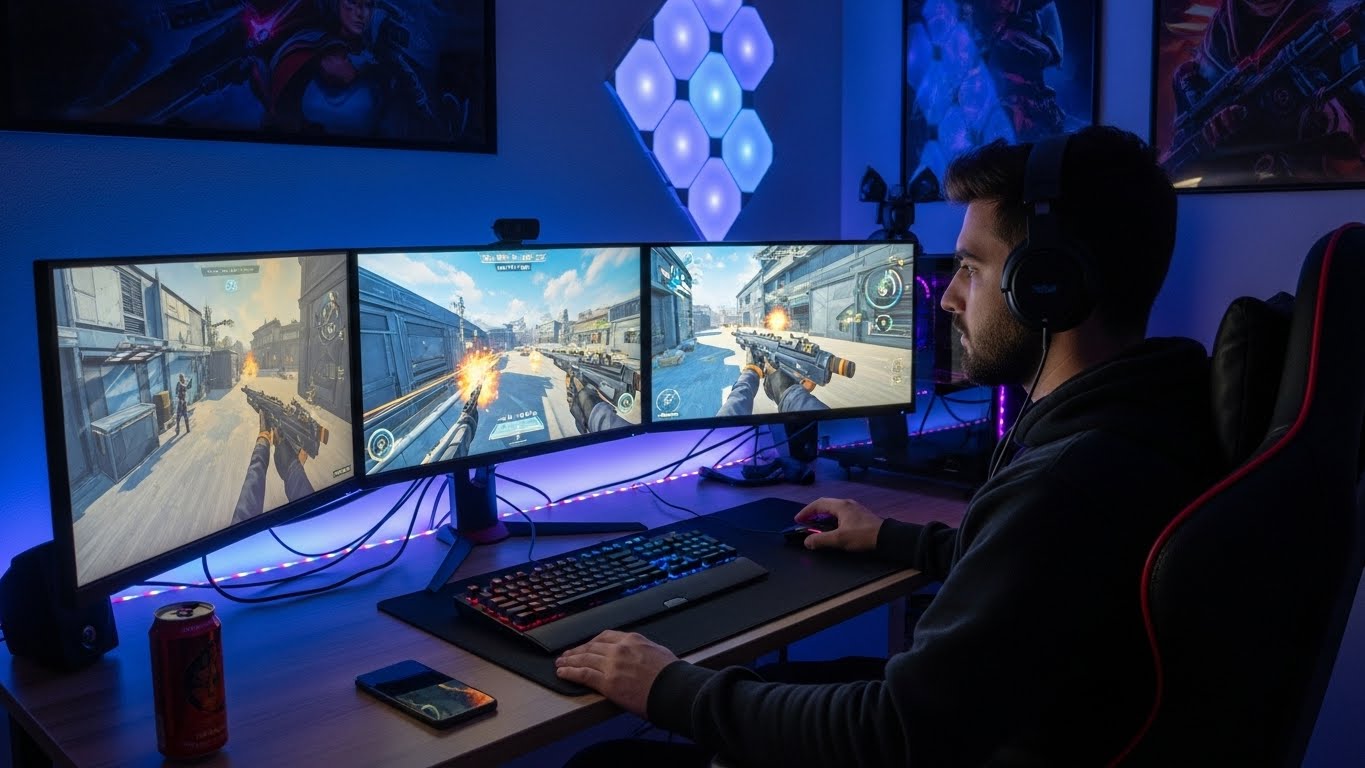
Gaming has become an integral part of modern culture, transcending its humble beginnings to evolve into a multi-billion-dollar global industry. From early arcade games to modern virtual reality experiences, the world of gaming has grown exponentially, influencing everything from social interaction to technological advancements. Today, gaming is not just a way to pass time; it’s a thriving, immersive universe where millions of people connect, compete, and create.
In this blog post, we will explore the journey of gaming from its roots to its current state, examining the diverse genres, the cultural impact of gaming, and the exciting future that lies ahead. Whether you’re a casual player or an avid gamer, understanding the evolution of gaming is essential to appreciating its significance in our lives today.
The Beginnings of Gaming: A Pixelated Revolution
Gaming as we know it began in the 1950s and 1960s, with simple computer-based games designed by early pioneers of computing. The first known video game, Spacewar!, was created in 1962 by computer scientists at MIT. Though rudimentary by today’s standards, Spacewar! introduced the concept of interactive entertainment and served as the foundation for future game development.
In 1972, Pong, one of the first commercially successful arcade games, was released by Atari. It simulated a game of table tennis with simple graphics and was a huge success in arcades. This marked the birth of the arcade gaming era, with titles like Space Invaders and Pac-Man soon following in the late 1970s and early 1980s. These games were not just a form of entertainment but a cultural phenomenon, capturing the imagination of millions of people around the world.
The early days of gaming were defined by simple, pixelated graphics and straightforward gameplay mechanics. Despite their simplicity, these games introduced the core elements that would come to define the industry: competition, skill, and the thrill of accomplishment. While the graphics were far from realistic, the sense of engagement and excitement they provided was unprecedented.
The Rise of Home Consoles: Gaming Goes Mainstream
The 1980s marked a significant shift in the gaming industry with the advent of home consoles. Before this time, gaming was confined to arcades or specialized computer systems, but home consoles like the Atari 2600, Nintendo Entertainment System (NES), and Sega Genesis brought gaming into people’s homes. This shift allowed people to enjoy video games in the comfort of their living rooms, making gaming more accessible to the general public.
The Nintendo Entertainment System (NES), released in 1985, was particularly influential. It brought iconic games such as Super Mario Bros., The Legend of Zelda, and Metroid into the spotlight. These games introduced expansive worlds, memorable characters, and complex gameplay mechanics that would become hallmarks of the gaming industry for decades to come.
During this time, games evolved from simple arcade-style experiences to more intricate, story-driven narratives. RPGs (role-playing games) like Final Fantasy and Dragon Quest began to gain popularity, offering players rich worlds to explore and characters to develop. The success of the NES helped establish video gaming as a mainstream form of entertainment, setting the stage for future innovations.
The Age of 3D: The Revolution of Technology and Graphics
As technology advanced through the 1990s, gaming entered a new era. The transition from 2D to 3D graphics was one of the most significant technological advancements in gaming history. Early 3D games, such as Super Mario 64 and The Legend of Zelda: Ocarina of Time, revolutionized the way players interacted with virtual worlds. These games introduced fully realized 3D environments, offering players a sense of immersion and depth that had never been seen before.
The Sony PlayStation, released in 1994, was one of the first consoles to truly harness the power of 3D graphics. The PlayStation era brought groundbreaking games like Gran Turismo, Metal Gear Solid, and Final Fantasy VII, which pushed the boundaries of what was possible in terms of storytelling, visuals, and gameplay.
The leap to 3D graphics also enabled the development of open-world games, where players could explore expansive virtual environments without the limitations of linear level design. Games like Grand Theft Auto III and The Elder Scrolls III: Morrowind were pioneers of this genre, allowing players to roam freely in vast, interactive worlds that felt alive with possibilities.
The Online Revolution: Connecting Players Around the World
The late 1990s and early 2000s saw the rise of online gaming, which fundamentally changed the way people played video games. The ability to connect with players from around the world, regardless of location, opened up new dimensions of competition, cooperation, and social interaction.
**Games like Diablo II and EverQuest were among the first to offer online multiplayer experiences, allowing players to join virtual worlds and interact with others in real-time. But it was the launch of World of Warcraft in 2004 that truly defined the online gaming era. This massively multiplayer online role-playing game (MMORPG) attracted millions of players and set the stage for the modern landscape of online gaming.
In addition to MMORPGs, online multiplayer shooters like Halo and Call of Duty allowed players to compete against one another in fast-paced combat, while MMOs like League of Legends and Dota 2 popularized competitive online gaming, paving the way for the rise of esports.
The social aspect of online gaming also became increasingly important. With platforms like Xbox Live and PlayStation Network, players could now connect with friends and strangers alike, forming teams, joining guilds, and engaging in friendly competition across the globe. The rise of streaming platforms like Twitch further amplified this trend, allowing players to broadcast their gameplay to audiences worldwide and interact with their viewers in real-time.
Mobile Gaming: The Game-Changer of the 21st Century
In the mid-2000s, mobile phones became more than just communication tools—they became portable gaming devices. With the release of the Apple iPhone in 2007, gaming experienced another major shift. Mobile gaming exploded in popularity, with simple yet addictive titles like Angry Birds, Candy Crush Saga, and Clash of Clans becoming massive hits.
The accessibility of smartphones and tablets allowed anyone with a mobile device to access a wide range of games, from casual puzzle games to more complex role-playing games and strategy games. Mobile gaming has proven to be the most accessible form of gaming, providing entertainment at the touch of a button, whether you’re commuting, waiting in line, or relaxing at home.
The rise of mobile gaming has also introduced new business models to the industry, such as free-to-play games with in-app purchases, which have reshaped the way developers monetize their games. Games like Fortnite and PUBG Mobile have popularized the battle royale genre, while Pokémon GO brought augmented reality (AR) gaming into the mainstream, blending the real world with virtual elements in a truly innovative way.
The Role of Esports: Gaming as a Professional Sport
As gaming continued to grow, it eventually became a spectator sport in its own right. The rise of esports has taken competitive gaming to new heights, with professional players, teams, and organizations now competing in tournaments for large cash prizes and sponsorship deals. Games like League of Legends, Dota 2, and Overwatch have become the cornerstones of the esports scene, attracting millions of viewers on streaming platforms like Twitch and YouTube.
Esports is a multi-billion-dollar industry, with events like The International (Dota 2’s premier tournament) and the League of Legends World Championship attracting tens of thousands of spectators in arenas around the world. Professional gaming has also gained recognition as a legitimate career, with players earning salaries, sponsorships, and endorsement deals akin to traditional athletes.
The Future of Gaming: What Lies Ahead?
The future of gaming is incredibly exciting, with new technologies and innovations constantly reshaping the landscape. Virtual reality (VR) and augmented reality (AR) are poised to revolutionize the way we experience games, offering fully immersive environments that blur the line between the virtual and physical worlds. Games like Beat Saber and Half-Life: Alyx are just the beginning of what could be a new era of interactive experiences.
Cloud gaming is another area with great potential. Services like Google Stadia and Xbox Cloud Gaming are making it possible to play high-quality games on virtually any device, without the need for expensive hardware. This could open up gaming to even more people, regardless of their access to powerful gaming PCs or consoles.
Artificial intelligence (AI) is also expected to play a larger role in gaming. From more intelligent NPCs (non-playable characters) to procedurally generated content, AI could help create dynamic, ever-evolving worlds that react to the player’s actions in real-time.
Conclusion: Gaming’s Lasting Impact
The journey of gaming from simple pixelated graphics to vast, interconnected virtual worlds has been nothing short of extraordinary. Gaming has become a cultural touchstone, influencing how we communicate, compete, and create. As technology continues to evolve, the possibilities for gaming are endless. From new genres to immersive experiences, the world of gaming is set to continue expanding, offering more opportunities for connection, creativity, and exploration. As gaming continues to grow and evolve, one thing is certain: it’s no longer just a hobby—it’s a global cultural movement.